Montgomery County
Preserve Tree Guide
Explore valuable information about tree preservation, protected species, and environmental stewardship throughout Montgomery County. This guide is designed to support awareness, conservation efforts, and responsible land management practices that help preserve the natural beauty and ecological health of our communities.
Lake Creek Preserve Trail Guide
Contributors
Carl Heinzler, Boy Scout Troop 1180, The Woodlands, TX
Antonio Rios, Boy Scout Troop 1180
Edwin Tas, Boy Scout Troop 1180
Jarett Steiner Troop 229
Glenn Buckley, Advisor
Visit lakecreektx.org for more information
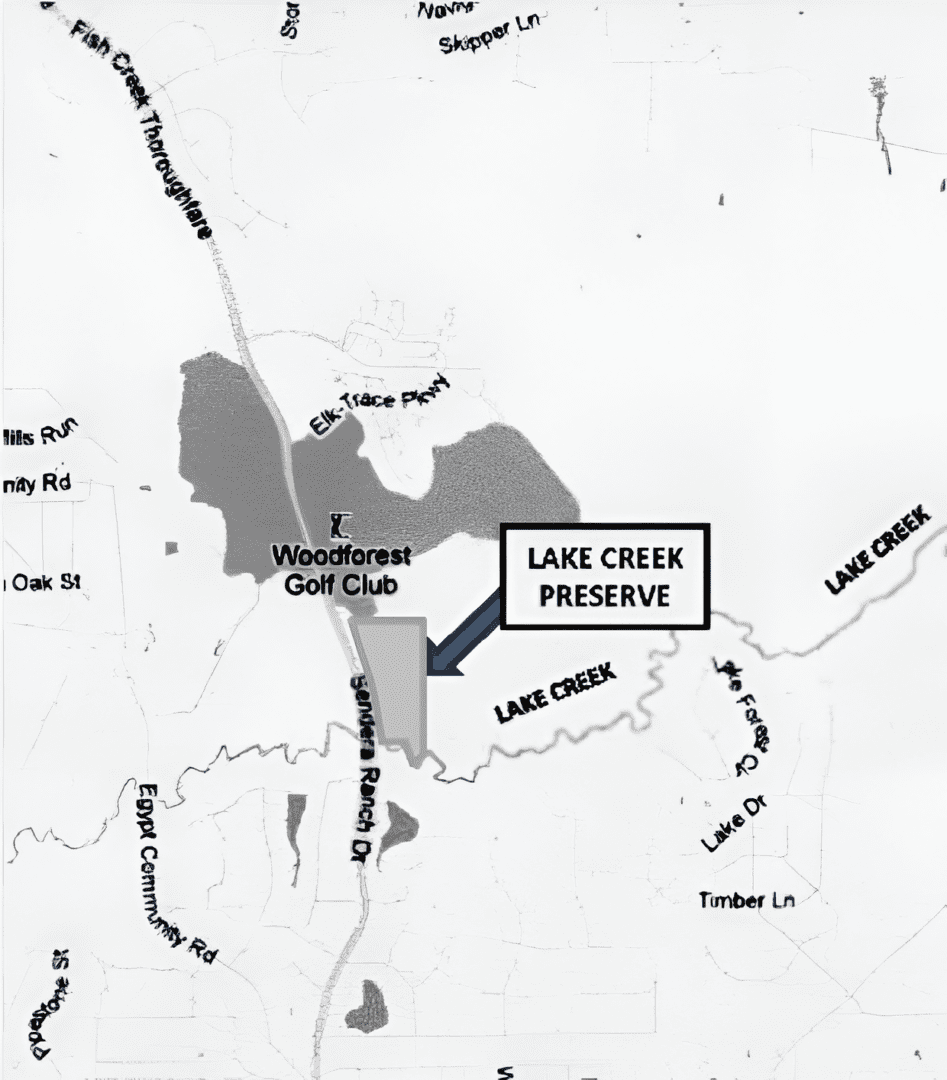
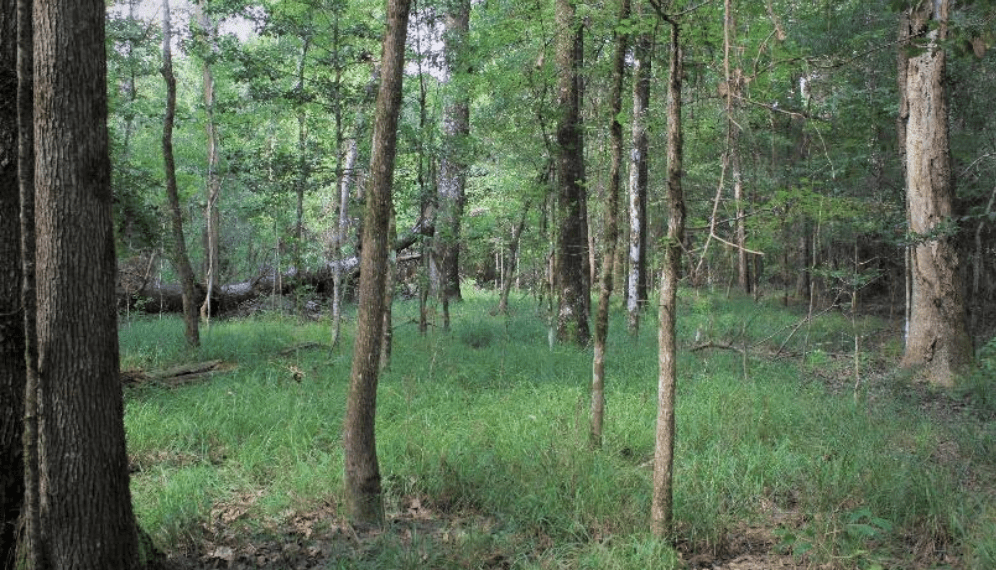
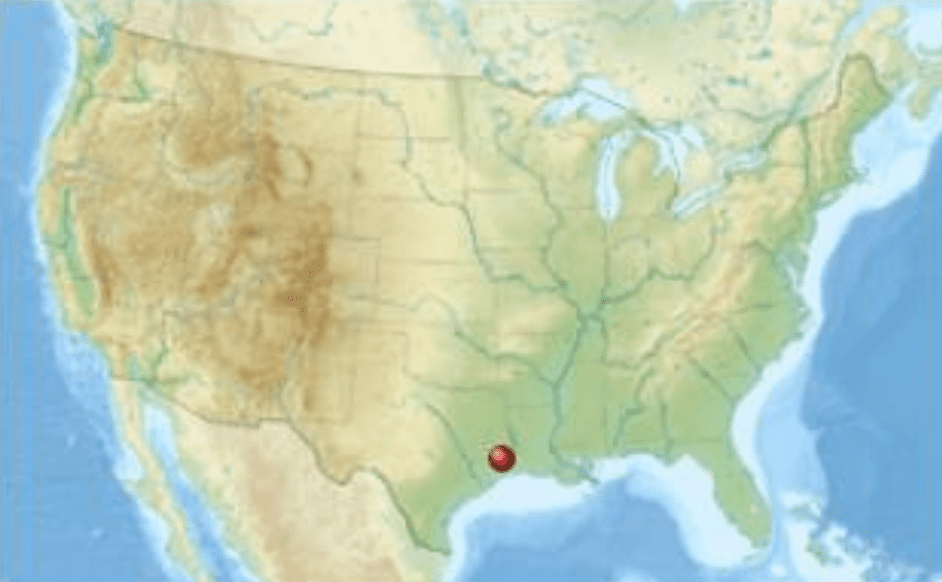
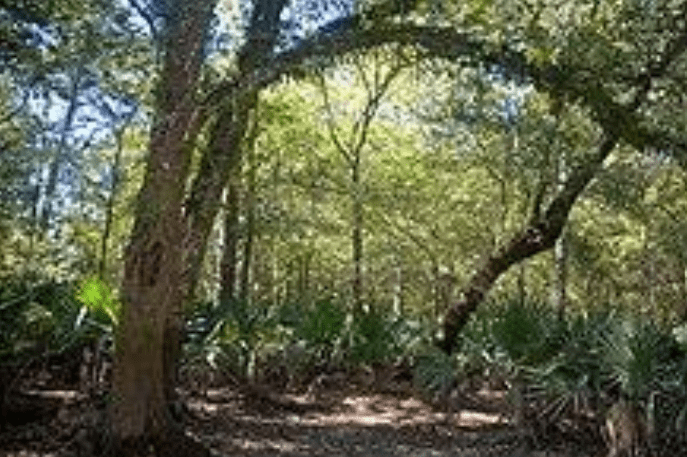
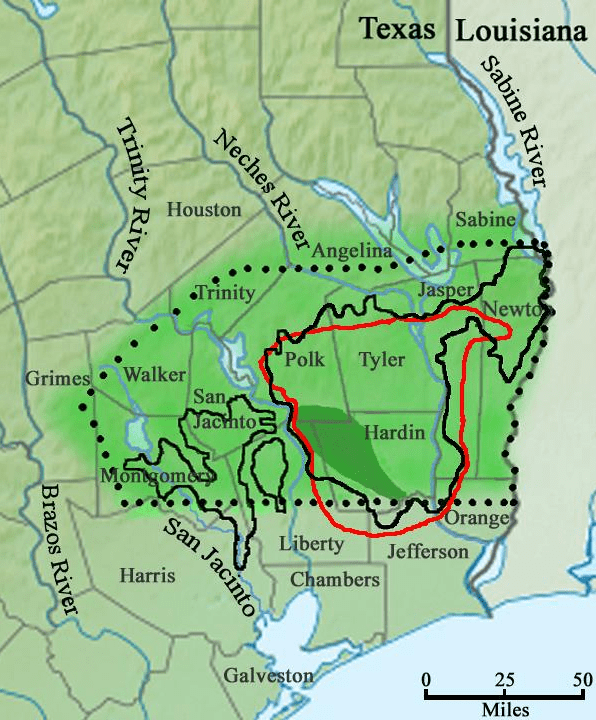
The Lake Creek Preserve is entirely in the floodplain of Lake Creek containing bottomland hardwood forests, forested wetlands and marshy areas along Lake Creek in southern Montgomery County, TX. It borders Woodforest Golf Club to the north and Fish Creek Thoroughfare to the east. It is also within the western extent of what has been mapped as the Big Thicket ecosystem and contains many of the related habitats. This trail guide gives brief descriptions of some of the numerous varieties of trees and other plants that are abundant in the Lake Creek Preserve area and represent a bottomland hardwood association that can tolerate periodic to continual flooding.
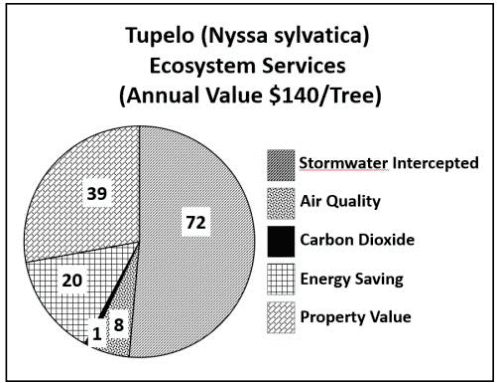
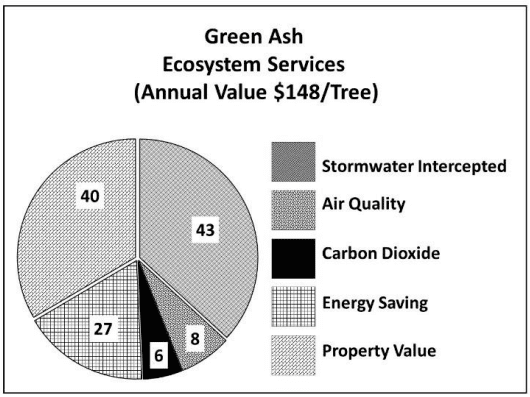
Forested areas like Lake Creek Preserve and the associated bottomland hardwood forests add significant value to the lives of humans. Texas A&M Forest Service has studied and estimated the value of Texas’ forests and of individual trees. The Texas A&M Forest Service website, http://texasforestinfo.tamu.edu/treetrails/#, classifies annual value provided by selected trees in the following categories:
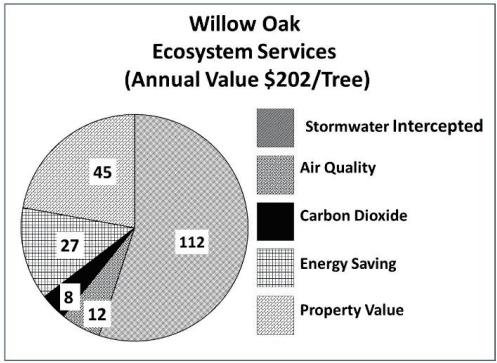
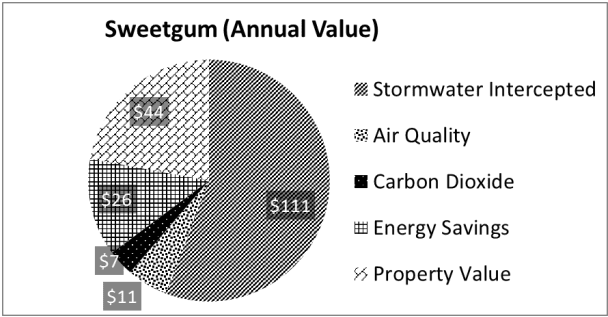
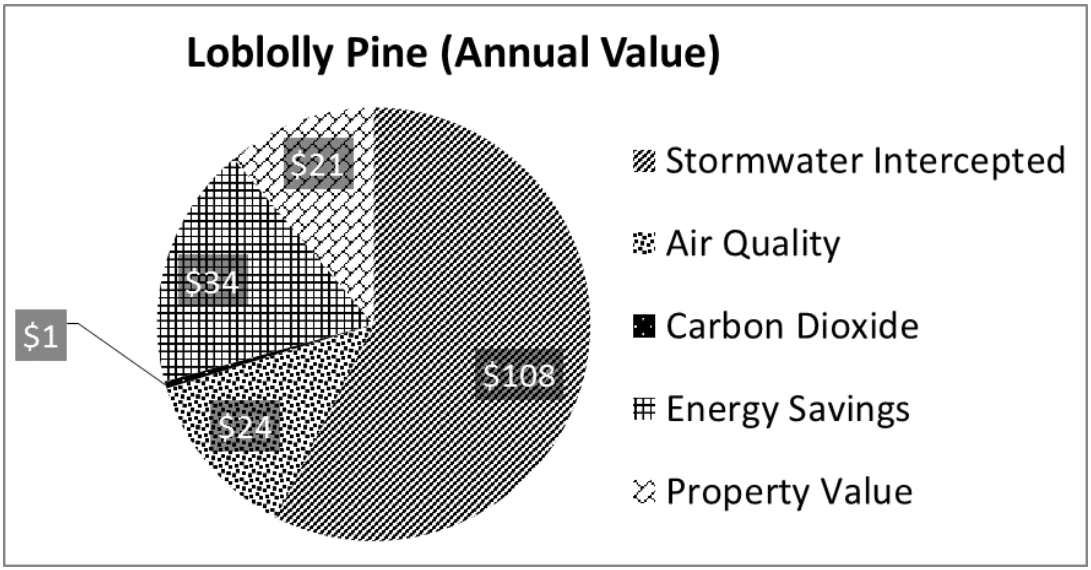
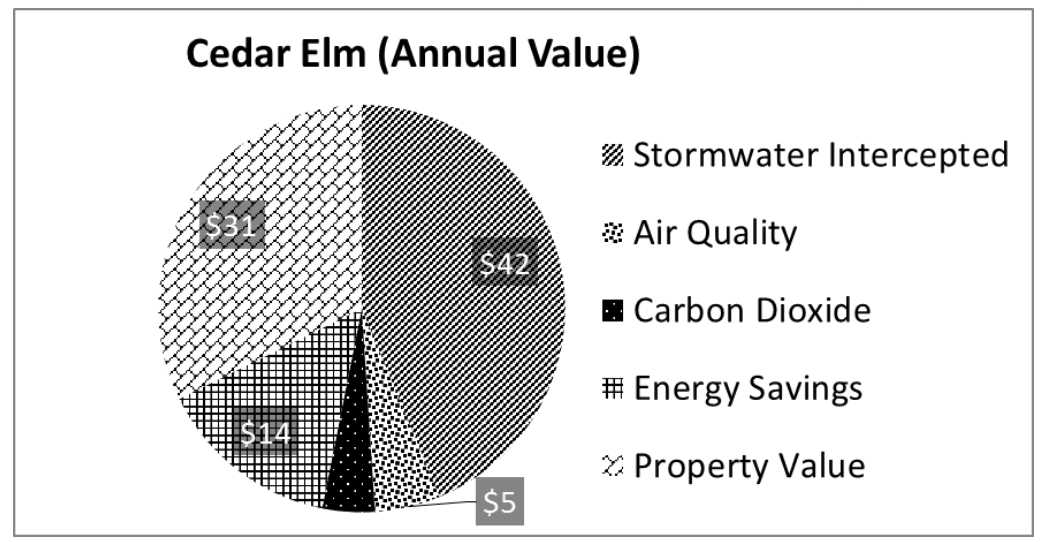
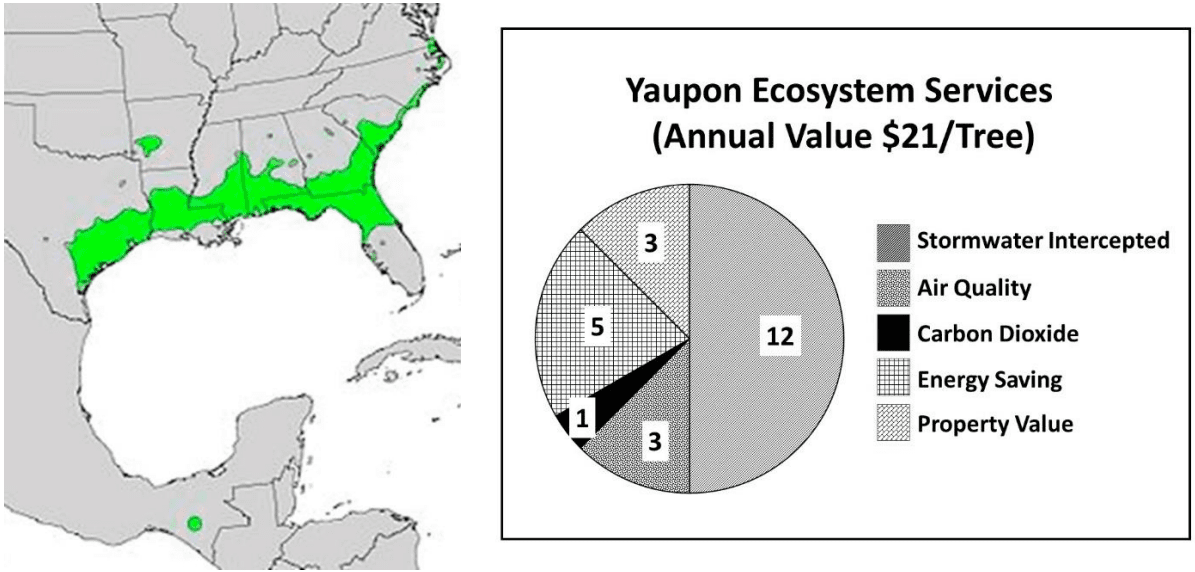
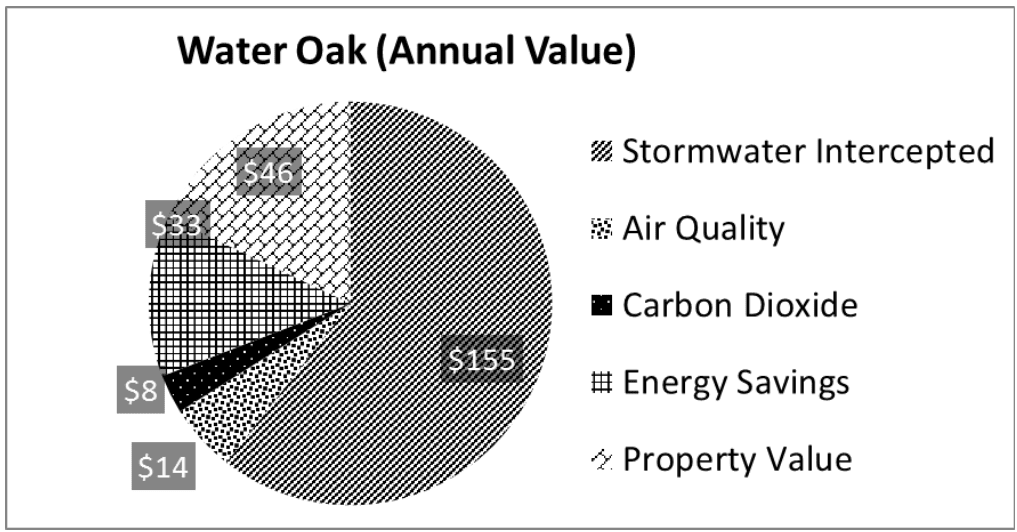
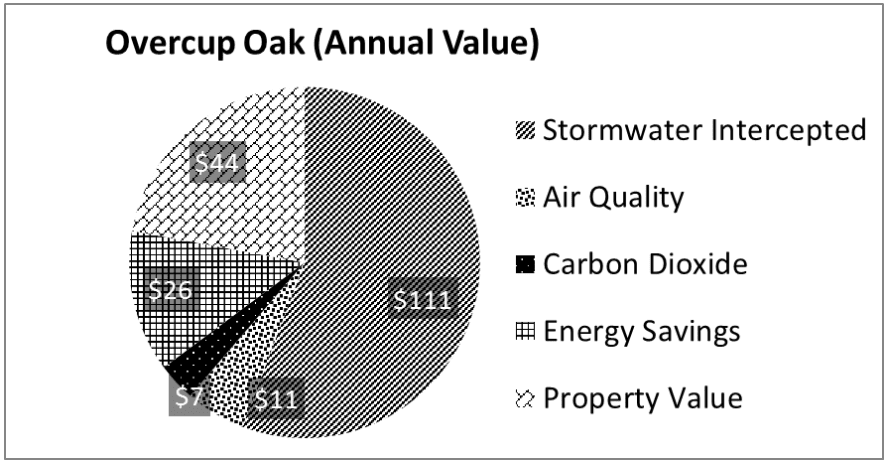
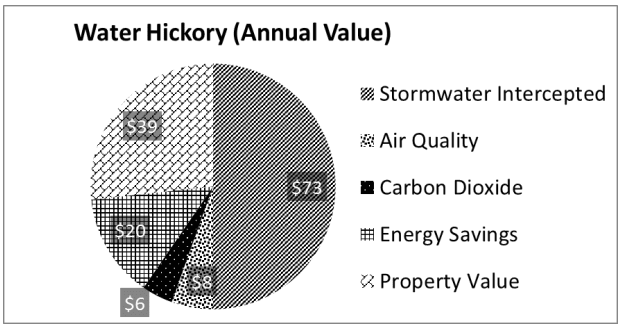
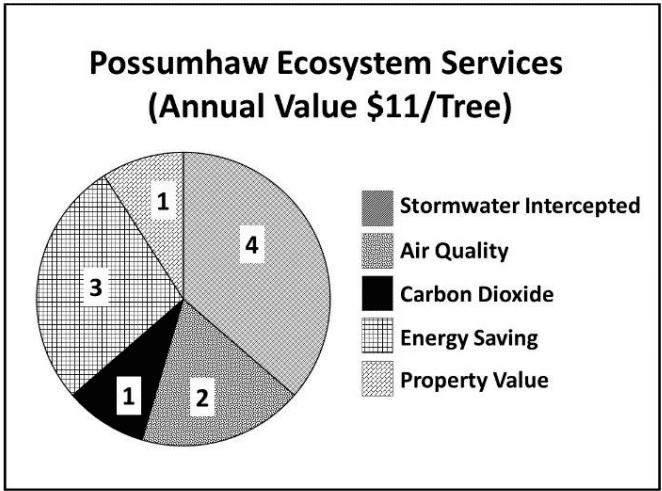
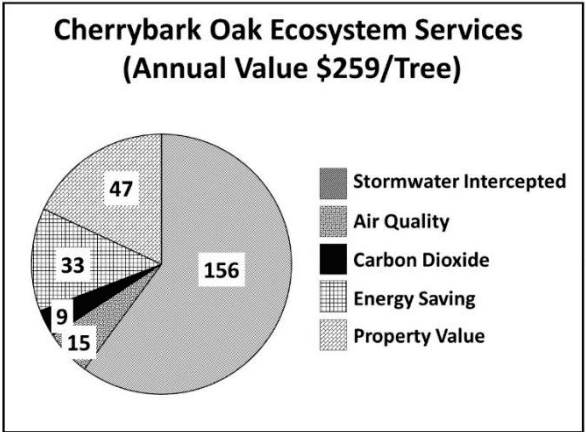
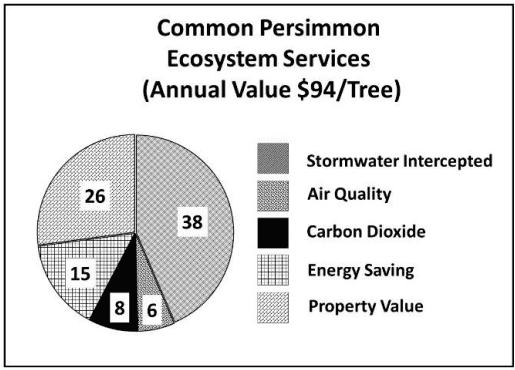
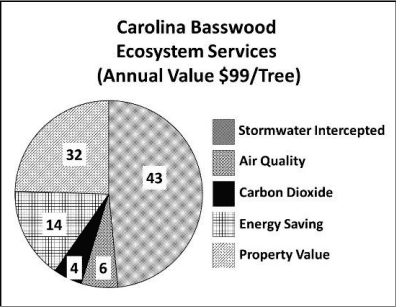
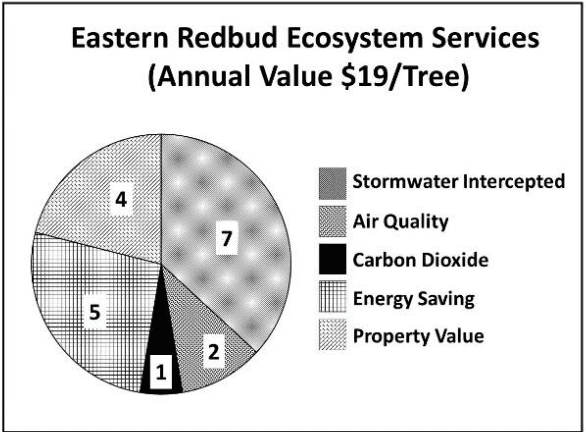
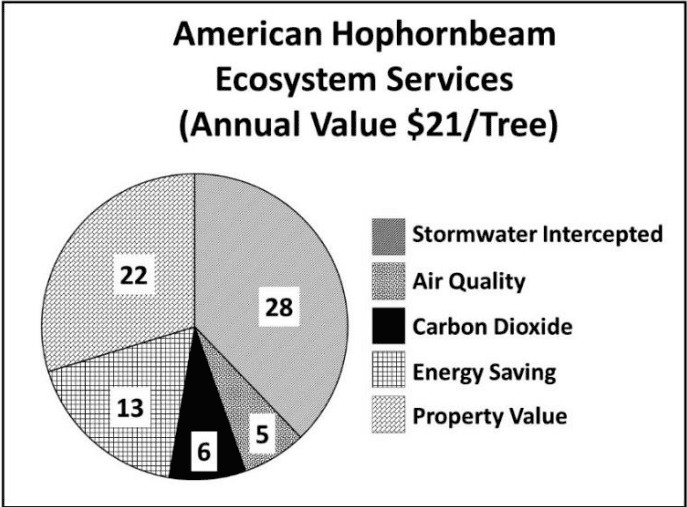
When available, tree values are noted in this trail guide. The pie diagrams give the total and relative values in U.S. dollars for services provided by the mature size of specific trees identified on the trail. Because we are valuing the services provided within the preserve, energy savings and property values would generally not be included in ecological services provided by the preserve (although proximity to green space does have some effect on property value). If the tree is not full size the value of its services will increase as it grows. There will also be differences between species either because of different mature sizes or different biology.
In addition to the value of ecological function most trees have at least some commercial value for lumber. The commercial value is generally significantly lower than the ecological value.
Texas A&M Forest Service also estimates the value of forest ecosystems throughout the state. These values can be viewed at http://texasforestinfo.tamu.edu/map/fv. The annual value of forest ecosystems for Montgomery County alone is $821 million. The assessed value of ecosystem services for all East Texas counties totals $26.1 billion or $2,177 per acre.
Statewide, Texas has over 62 million acres of forested land and forested ecosystems valued at $92.9 billion annually. This value was summarized in October 2013 by the Texas A&M Forest Service in the following categories:
Information, maps and sketches were derived from a number of additional
resources including the following:
NRCS online plant database at https://plants.usda.gov/
Guide to Southern Trees, E. Harrar and J.G.Harrar, Dover, 1962
Forest Trees of Texas and How to Know Them, Bulletin 20, Texas Forest Service.
Texas Trees: A Friendly Guide, P. Cox and P. Leslie, Corona Publishing, 1993
Audubon Society Field Guide to North American Trees: Eastern Region, E. Little, Knopf, 1986.
Trees, Shrubs and Woody Vines of the Southwest, R.A. Vines, Texas Press,
1986.
LAKE CREEK PRESERVE NATURE TRAIL
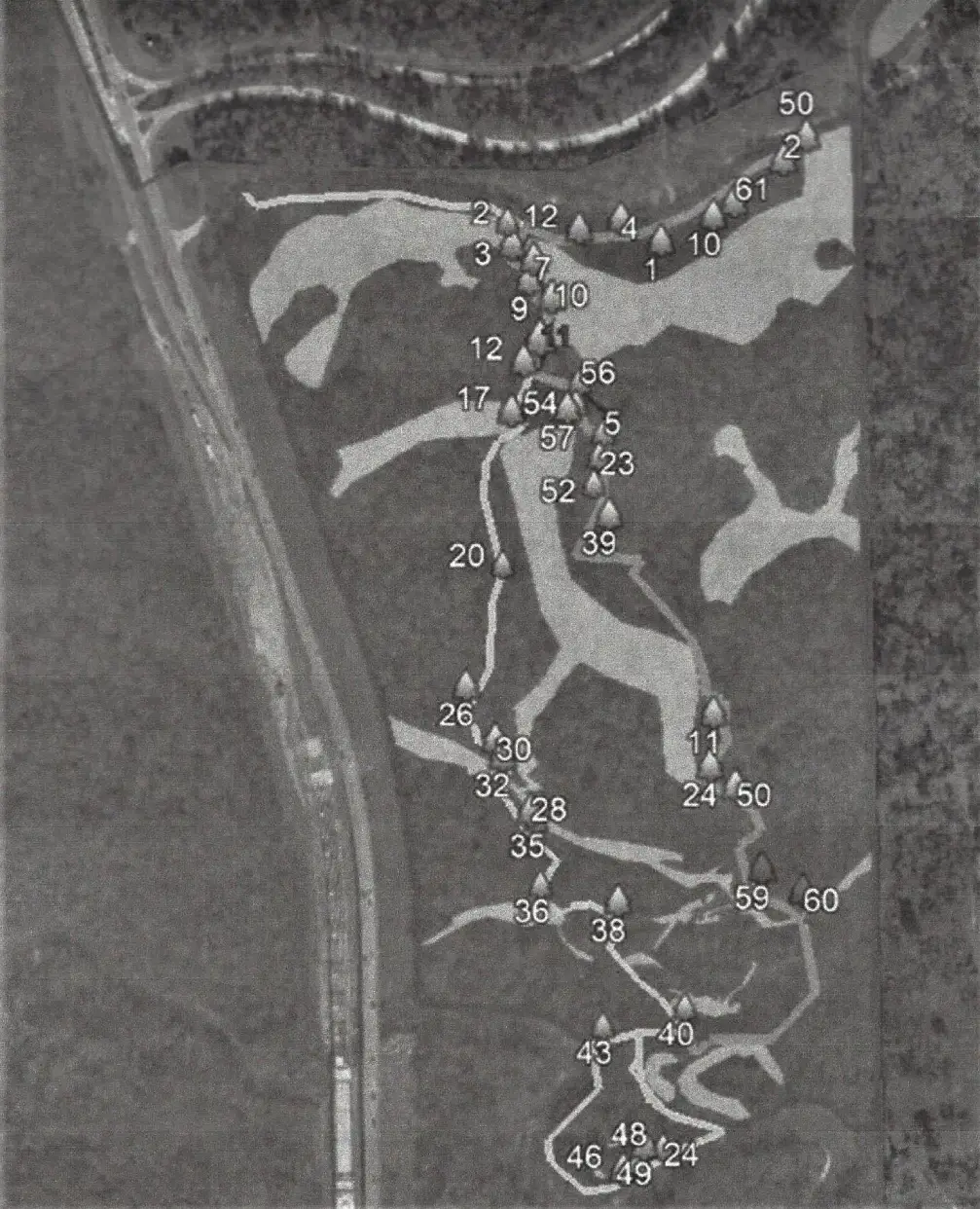
The following trees are marked by numbered posts at the locations indicated on the above map. Additional trees will be added as Scouts complete their work. The guide for these trees follows below.
1. Black Gum
2. Willow Oak
3. Sweetgum
4. Farkleberry
5. Loblolly Pine (duplicate on blue trail)
7. American Holly
9. Red Bay
10. Parsley Hawthorn
11. Little Hip Hawthorn (State Co-champion)
12. Ironwood (American Hornbeam)
17. Cedar Elm
20. Yaupon
23. Water Oak (mature tree on blue trail)
24. American Elm
26. Palmetto
28. Overcup Oak
28. River Cane
30. Water Hickory
32. Water Locust
35. Green Ash
36. Black Willow
38. Green Hawthorn
39. Turk’s Cap
40. Possumhaw
41. Chinaberry
42. Sugarberry
43. Cherrybark Oak (Swamp Red Oak)
44. Sycamore
46. Eastern Red Cedar
48. Box Elder
49. River Birch
50. Persimmon
51. Aquatic Elm (Planer Tree)
52. Carolina Basswood
54. Eastern Redbud
56. Eastern Hophornbeam
57. Muscadine Grape
58. Inland Sea Oats
58. Big Thicket Flats
LAKE CREEK PRESERVE VEGETATION
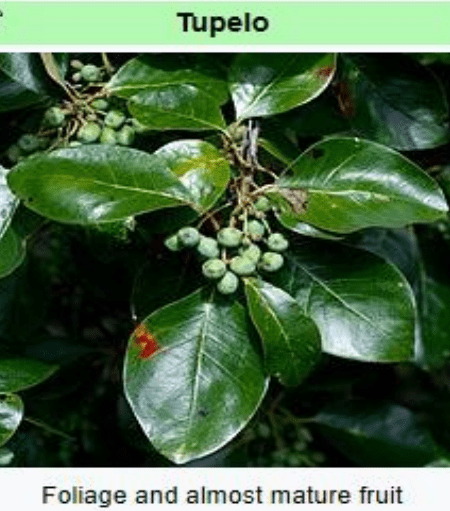
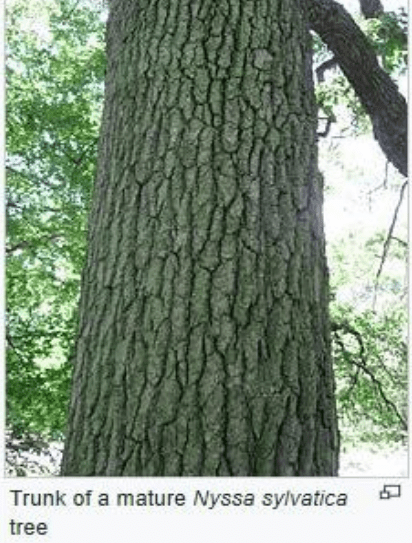
Scientific Name: Nyssa Sylvatica
Common Name: Black Gum, Black Tupelo, the name tupelo is of Native American origin, coming from ito 'tree' and opilwa ‘swamp’.
Mature Height: 66 – 82 ft
Maximum Trunk Diameter: 20 – 39 in
Ecological Value: $140/tree
Bark: Medium gray, furrows with age, resembling alligator hide on old trunks
Leaves: Simple leaves 3 – 6” in length with an oval shape that are glossy and dark green in the summer. Spectacular fall foliage with shades of yellow, orange, bright red, purple or scarlet.
Flowers: Greenish white flowers, rich source of nectar for bees
Fruit: Some produce edible small bluish-black fruit that ripens in late September and early October, eaten by many species of birds and mammals.
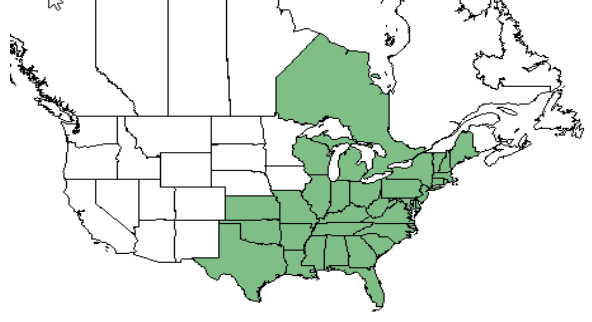
Habitat: Highly tolerant of wet soils and flooding. Native to eastern North America, southeastern Canada through Eastern US. Its age can exceed 650 years.
Description: Black gum is a medium-sized deciduous tree in the Dicot group that is native to eastern North America. It is a popular ornamental tree for shade and spectacular Autumn leaf colors used in parks and gardens. It is one of the best honey-producing trees.
Uses: crates, pallets, railroad ties, tool handles, pulpwood, furniture, firewood, erosion control. It is used by artistic wood carvers. Easily pulped and used for high-grade magazine & book papers. Food source for many birds, mammals, butterflies, & months. Valued as a honey plant, producing a light mild-tasting honey. Ornamental tree used in parks & gardens.
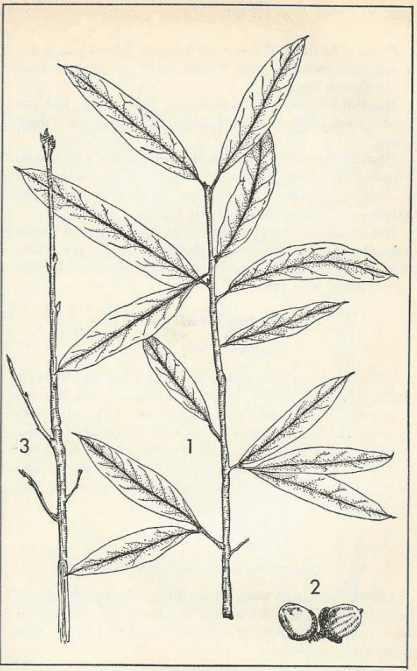
Scientific Name: Quercus phellos
Mature Height: 60–80 feet
Maximum Trunk Diameter: 24–36 inches
Bark: Thin and tight, gray and somewhat smooth at first, becoming roughened and darker with maturity. Eventually almost black.
Leaves: Alternate, deciduous, turning pale yellow in the fall; 2–4 inches long and ½–1 inch wide. Shiny and light green on the upper surface, smooth, dull, and slightly hairy below.
Flowers: Appear in spring and occur on the same tree. Male flowers grow in hairy, drooping catkins, while female flowers are tiny and found in clusters at the leaf axis.
Ecological Value (Annual): $202
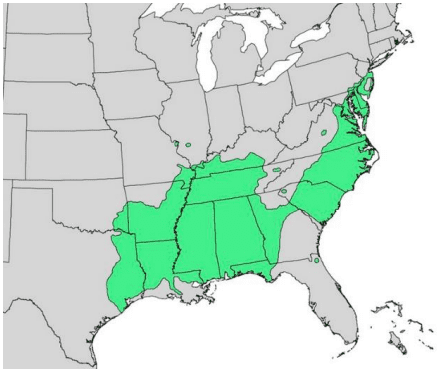
Description: You are located within a stand of relatively young Willow Oak. It is a member of the Red Oak group and, when mature, becomes a large tree with a conical crown and straight trunk. It is usually found along streams and in wetlands in frequently flooded bottomlands, and rarely in uplands unless planted as a landscape tree.
Uses: Landscaping, wildlife food and habitat, railroad timbers, and pallets. While the acorns may be eaten, they are rather small and bitter due to their high tannin content. The tannins can be leached out, though this may reduce mineral content. The galls are highly astringent and have been used to treat hemorrhages, diarrhea, and dysentery. Roasted and ground acorn shells have also been used as a coffee substitute.
Scientific Name: Liquidambar styraciflua L.
Mature Height: 100 feet
Maximum Trunk Diameter: 3 feet
Bark: Gray and deeply furrowed (little ditches).
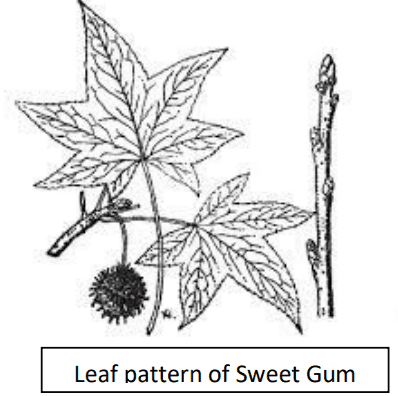
Leaves: Star-shaped with five pointed lobes and a long stalk.
Value (Annual): $199
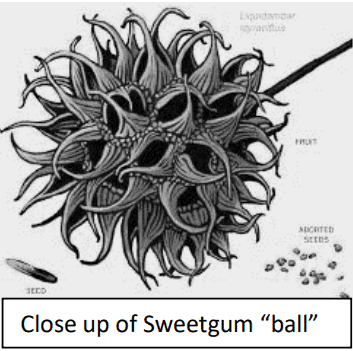
Description: Young sweetgums are pioneer plants, growing quickly and taking over open fields. It is one of the most common hardwoods in the southeastern United States. Fully grown leaves are about six inches long and bright green. In the fall, the leaves turn red. Sweetgums are aromatic, meaning they have a pleasant smell; crushing a leaf releases this fragrance. The fruits of the Sweet Gum are spiky green balls that turn brown with age. They are a little over an inch wide and dangle on a long stalk. Each ball has prickly points that open to release seeds, with two winged seeds coming from each opening.
Uses:
Erosion Control: Sweetgum is a good choice as a windbreak tree because of its fast growth and tolerance of a wide variety of sites.
Wildlife: Its seeds are eaten by birds, squirrels, and chipmunks.
Timber: Sweetgum is primarily used for lumber, veneer, plywood, slack cooperage, railroad ties, fuel, and pulpwood. Its wood is also used for furniture, interior trim, woodenware, and pulpwood for fine papers.
Recreation and Beautification: It is used as a specimen plant, shade tree, and street tree.
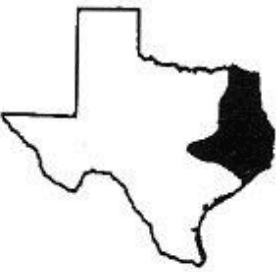
Habitat: Occurs in low, wet areas of the Piney Woods on acidic soils, as well as drier upland soils, though in more limited numbers.
Scientific Name: Vaccinium Arboreum
Common Names: Farkleberry, Sparkleberry
Mature Height: 7.5 – 22.5 ft
Maximum Trunk Diameter: 14 in
Bark: Gray to orange-brown with a brick-like pattern
Leaves: Leathery, glossy green leaves shaped oval to elliptical with an acute apex. Leaves turn red during winter.
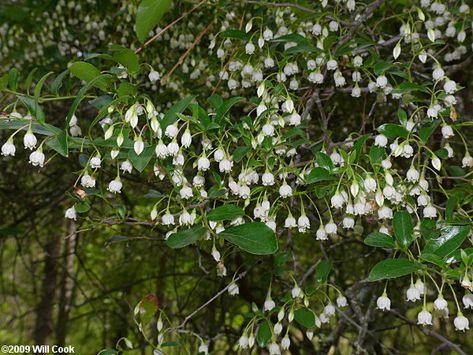
Flowers: little fragrant bell-shaped drooping white flowers.
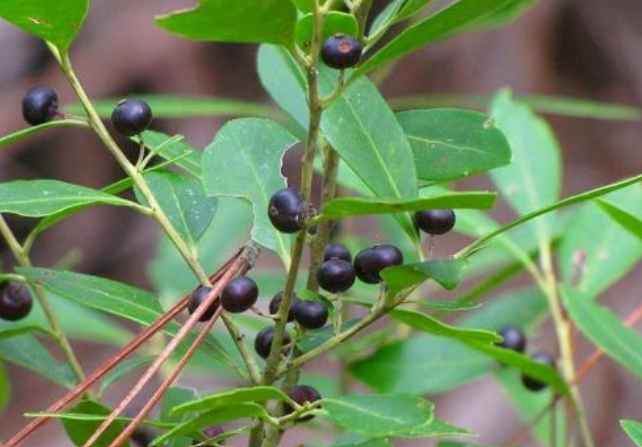
Fruit: Farkleberries are ripe when black which happens in the fall and will remain on the tree and edible well into winter even when somewhat dried and wrinkled. Have very small seeds.
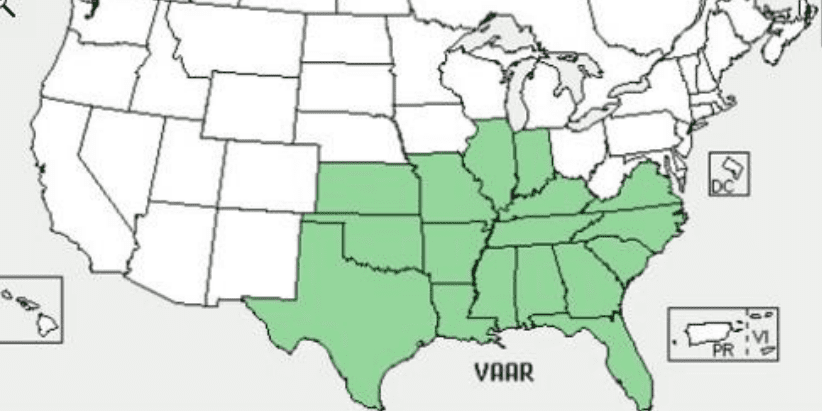
Habitat: Grows in neutral to strongly acidic soils in moist environments such as wet bottomlands and creek banks.
Ecological Value: N/A
Description: Farkleberry is a bushy shrub or small tree belonging to the dicot group and the heath family. It grows naturally throughout the southeastern and south-central United States. It is evergreen in southern regions and deciduous in northern regions. The black berries are a favorite food source for many wildlife species.
Uses: Provides food for many birds and animals. Medicinal uses include treatment for diarrhea, dysentery, and sore throats. Wood is used for tool handles, tobacco pipes, and small wooden items. Flowers provide nectar for honeybees. Berries can be used in pies and jellies.
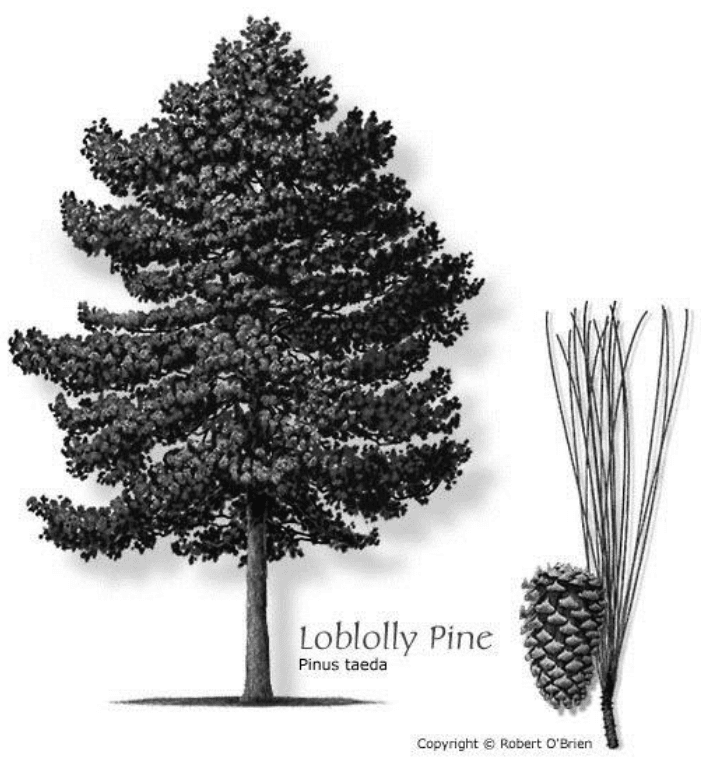
Scientific name: Pinus Taeda
Mature height: 90 – 110 feet
Trunk: 1 – 5 feet
Value (annual): $188
Description: Loblolly Pine, also called Arkansas pine or North Carolina pine, is a large evergreen tree and the largest of the southern pines. It reaches heights of 90' to 110' with a diameter of 1 to 5' with exceptional specimens reaching 160'. The tallest Loblolly Pine currently known stands at 169' in Congaree National Park (SC).
Loblolly Pine has a long, clear trunk, ascending limbs, and a rounded, spreading crown. It is one of several pines native to the Southeastern United States, from central Texas east to Florida, and north to Delaware and Southern New Jersey. Over 50% of the standing pine in the southeast is loblolly.
The word loblolly means "low, wet place", but these trees are not limited to that specific habitat. Loblolly Pines grow well in acidic clay soil, which is common throughout the South, and are thus often found in large stands in rural places.
The famous "Eisenhower Tree" that was on the 17th hole of Augusta National Golf Club was a Loblolly Pine. U.S. President Dwight D. Eisenhower, an Augusta National member, hit the tree so many times that, at a 1956 club meeting, he proposed that it be cut down. Not wanting to offend the President, the club's chairman, Clifford Roberts, immediately adjourned the meeting rather than reject the request outright.
Needles: Its needles are in bundles of three, sometimes twisted, and measure 4” to 9” long, an intermediate length for southern pines. They have a slight bluish-green tinge, are stiff, and sometimes slightly twisted. The needles usually last up to two years before they fall, which gives the species its evergreen character. Although some needles fall throughout the year, most needles fall during the autumn and winter of their second year.
Bark: The bark is grayish-brown and furrowed with elongate, broad, irregular plates. Young twigs are reddish-brown and scaly. Buds at the ends of branches are much thinner than associated slash and longleaf pine.
Wood: The wood, which is marketed as southern yellow pine, is primarily used for pulp and paper but also for lumber and plywood. It may be sold interchangeably with shortleaf pine. This tree is commercially grown in extensive plantations.
Wildlife value: Loblolly pine stands are important for numerous wildlife species. The trees provide habitat for many animals, including white-tailed deer, wild turkey, gray squirrels, rabbit, quail, and doves. Many songbirds feed on the seeds and help propagate the trees through seed dispersal. Red crossbills depend on loblolly pine seeds for up to 50% of their diet. Other birds that frequent the trees include pine warblers, Bachman's warblers, and brown-headed nuthatches. Osprey and bald eagles often nest in tall loblolly pines.
Two endangered species that also use these pines are fox squirrels, which eat the cones, and red-cockaded woodpeckers, who will sometimes nest in old growth trees.
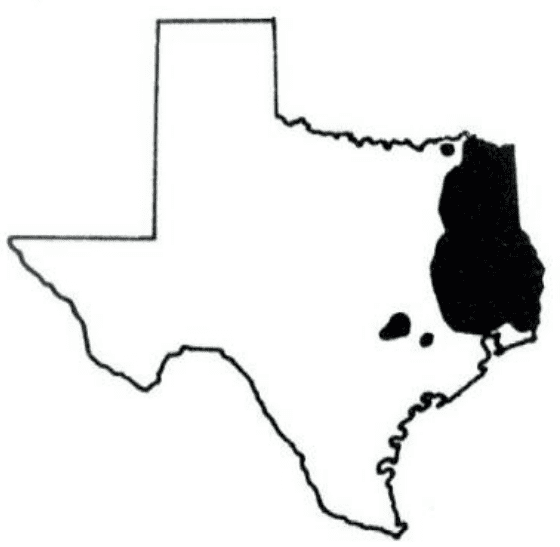
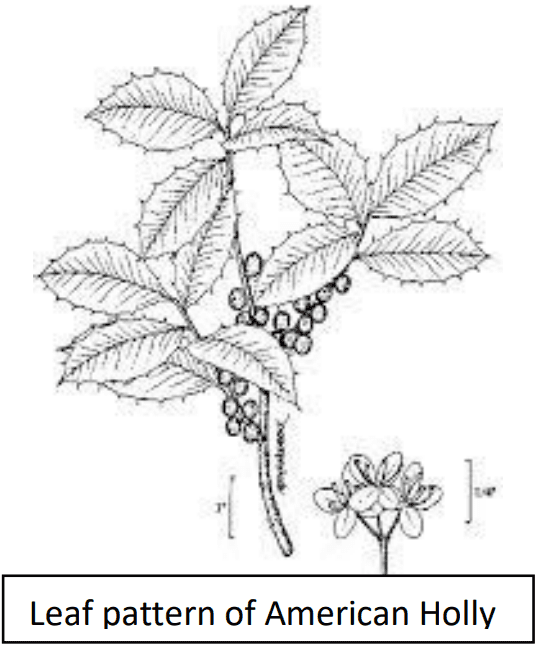
Scientific name: Ilex opaca Aiton
Mature Height: 15-30 feet
Max Height: 100 feet
Mature Trunk Diameter: 1.5 feet
Max Trunk Diameter: 4 feet
Leaves: 2-3 in long
Value: Not Available
Description: The American Holly is a medium-sized broadleaved evergreen. The bark is light gray, roughened by small warty lumps. The branchlets are stout, green at first and covered with rusty down, later smooth and brown. The winter buds are brown, short, obtuse or acute.
The leaves are often pale yellow beneath; the edges are curved into several sharp, spike-like points, and a wedge-shaped base and acute apex. The midrib is prominent and depressed, the primary veins conspicuous; the petiole is short, stout, grooved and thickened at the base with a pair of minute stipules. The leaves remain on the branches for two to three years, finally falling in the spring when pushed off by growing buds.
Uses: The attractive evergreen foliage and bright red fruit of this small tree make it very popular for landscaping. The same attributes that allow this tree to be a desirable ornamental make it one of the most sought after greens for Christmas decoration. The firm bright red berries are consumed by white-tail deer and 18 species of birds. The dense foliage also provides cover and nesting habitat for various songbirds.
Habitat: The trees do best in rich moist soils attaining heights of up to 60 feet, but also grow well in upland locations.
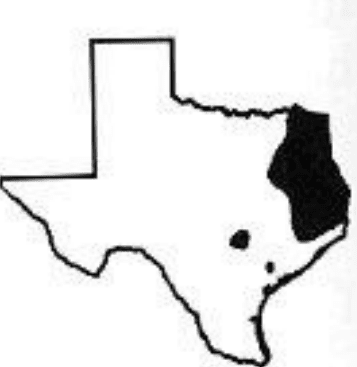
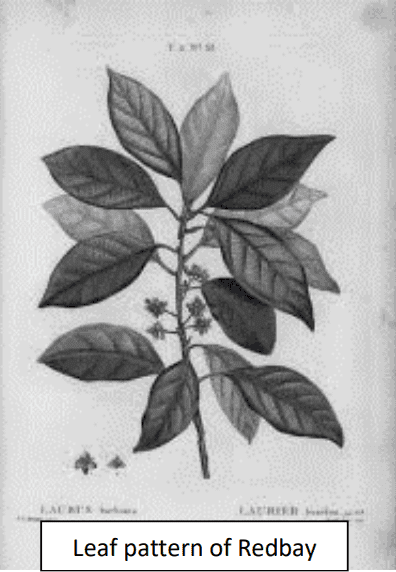
Scientific name: Persea borbonia
Mature Height: 25 feet
Mature Width: 25 feet
Value: Not available
Description: Persea borbonia can be present as either a small tree or a large shrub. It has evergreen leaves that are about 3 to 6 inches long with a lance shape. The leaves are arranged alternately and emit a spicy smell when crushed. The leaves vary in color from bright green to dark green.
These trees are capable of producing fruit that is a small, blue or black drupe. Redbay is a perennial, with a non-herbaceous stem that is lignified. It can attain a height of up to 60 feet.
Uses: The plant is not widely used in the present day for medicinal uses, however the Seminole Indians used to use it as an emetic, to induce vomiting. The dried up leaves can be used as a condiment. The wood is hard and strong, which can be used to build boats, cabinets and for lining the interior of structures. The wood is not traded on a very large scale so it is confined to the regions where P. borbonia grows.
Persea borbonia is cultivated as an ornamental tree for gardens and parks. Deer and bears also eat the leaves and fruits of redbay. Birds and turkey only eat the fruit of the redbay.
Habitat: In East Texas it is an understory tree and is tolerant of both upland and bottomland environments, but grows best in moist rich soils along streams and in swamps.
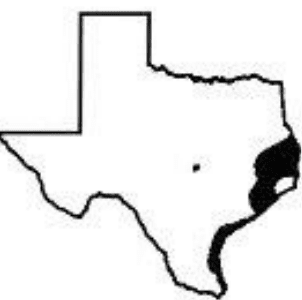
Scientific name: Crataegus marshallii
Mature Height: 15-20 feet
Max Height: 40 feet
Fruit: Red or orange apple like fruit; edible
Value (annual):
Description: The Parsley Hawthorn is very similar to the Littlehip Hawthorn. This is one of the most distinctive species of Hawthorn with its small divided leaves. The biggest difference is the leaf of the parsley which, hence the name, resembles parsley.
The bark is gray with red or orange patches and very scaly occasionally covered in peeling bark. The tree has the same five petal flowers as the Littlehip. The latin name honors Humphrey Marshall, a U.S. botanist who died in 1802. The tree has a reputably good record of landscaping compared to the Littlehip because of the ornamental parsley-like foliage.
Uses: This tree does have attractive and ornamental foliage which also provides shade so can be considered as a street tree. The fruit is food for many birds and small mammals. The tree also has a large spread and wide branches providing lots of space for a bird to make a nest.
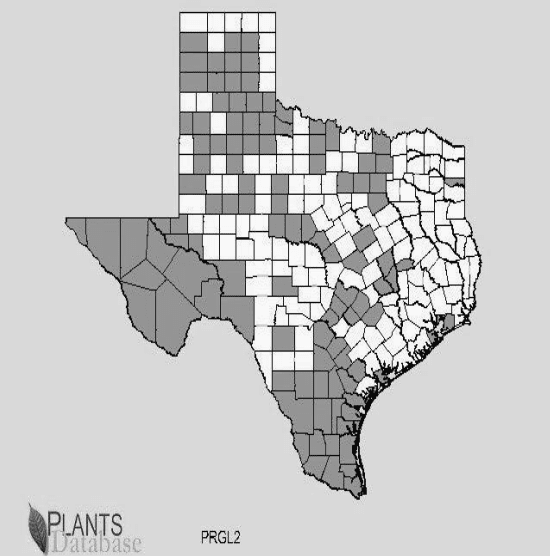
Habitat: The Parsley Hawthorn is native to sandy, sandy loam, or dry land even clay. The Hawthorn can adapt to garden soil well and can maintain a long life in a dry habitat without much rain. The recommended amount of rain needed is medium but can do fine with low water. The tree is most common in east Texas and Southeast United States from Texas to Florida.
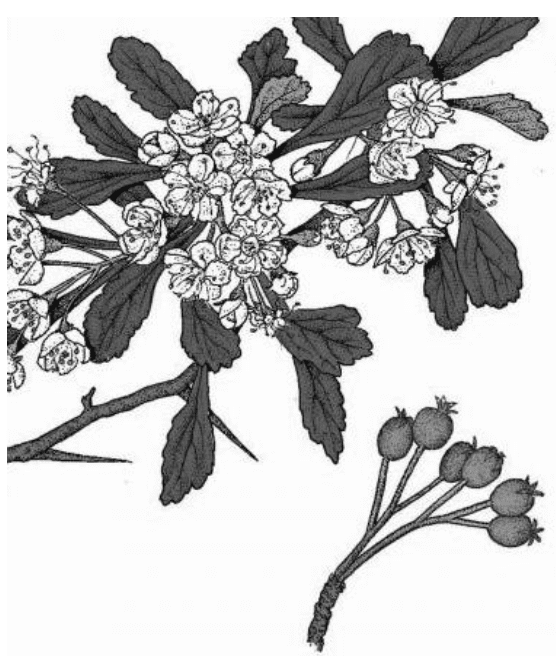
Scientific name: Crataegus spathulata
Mature Height: 15-20 feet
Max Height: 40 feet
Fruit: Red or orange apple like fruit; edible
Value (annual):
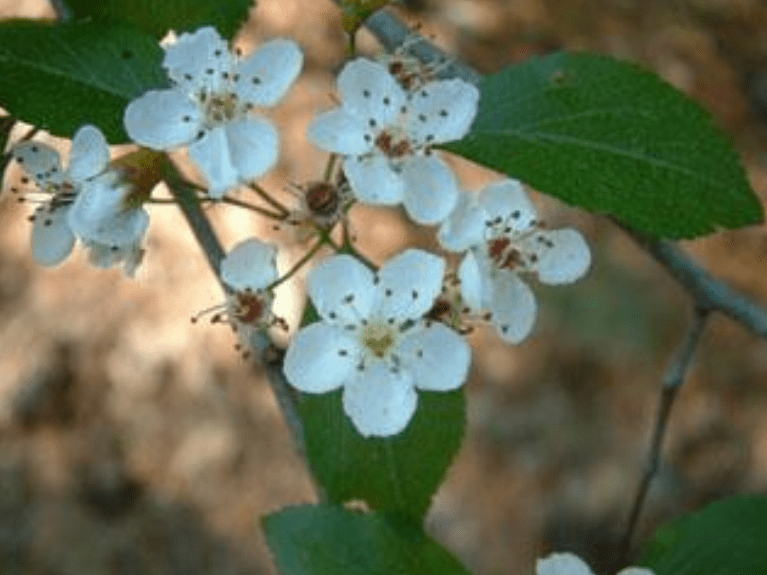
Description: The Littlehip Hawthorn is a deciduous tree reaching up to 20 feet. The low branched understory tree has reddish brown branches and is very twiggy. As a whole, the tree has a large spread and has an umbrella shape to it. Littlehip hawthorn has 1/3rd inch wide, 5-petaled white flowers in dense clusters. The flowers appear in mid spring are somewhat fetid smelling and often pollinated by flies and bees.
Uses: Littlehip hawthorns are not used too often for landscaping as they take a very long time to grow to their full potential. Typically, they mostly offer shade with their wide branches and massive spread. The “haws” or fruit are edible and offer food for lots of wildlife. The leaves are also edible but are thick and bitter tasting. The wide spread and thin branches also offer birds a comfortable home to nest.
Habitat: The tree is overall a very hardy species and once established can tolerate drought and floods. The family of this tree has dominated southern United States and continues to hybridize with around 200 species of Hawthorn around today.
Scientific name: Carpinus caroliniana Walt.
Mature Height: 20-30 feet
Type: Understory
Value: not available
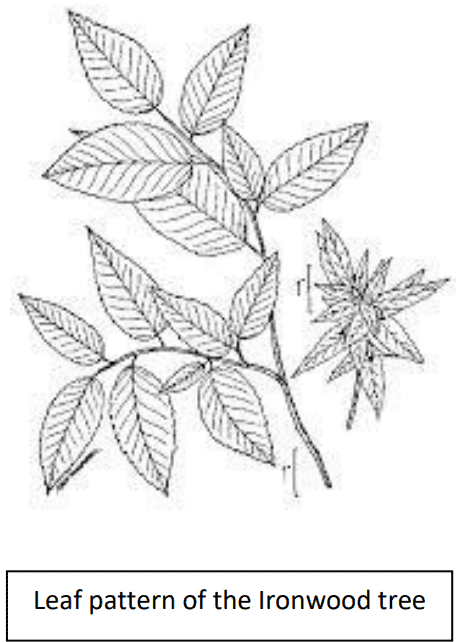
Description: American Hornbeam is a short, stubby tree that grows up to thirty feet tall. It can have one or more trunks, each a foot wide. The leaves grow to four inches long and two inches wide. They are simple leaves with a pointed tip and teeth on the edges. These leaves turn orangish-red in the fall.
Uses: The wood of Carpinus is of minor economic importance because of the small size of the trees. It is whitish, extremely hard, and heavy and has been used for making mallet heads, tool handles, levers, and other small, hard, wooden objects. The wood is not subject to cracking or splitting and was used by American pioneers for bowls and dishes.
Habitat: While Ironwood is generally found as an understory tree, it can occasionally grow to 50 feet. It can be found in fairly dry uplands, but prefers the moist rich soils along watercourses and forested bottomlands. The droughts of this century have caused a high mortality among the larger specimens and much of the deadfall along the trail is composed of larger Ironwood trees.
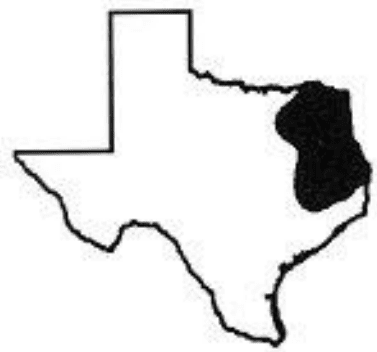
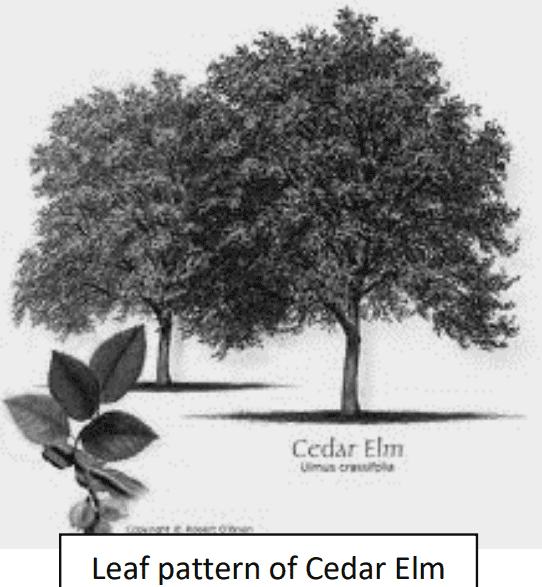
Scientific name: Ulmus crassifolia
Height: 50-60 feet
Leave length: 1-2 in.
Value (annually): $96
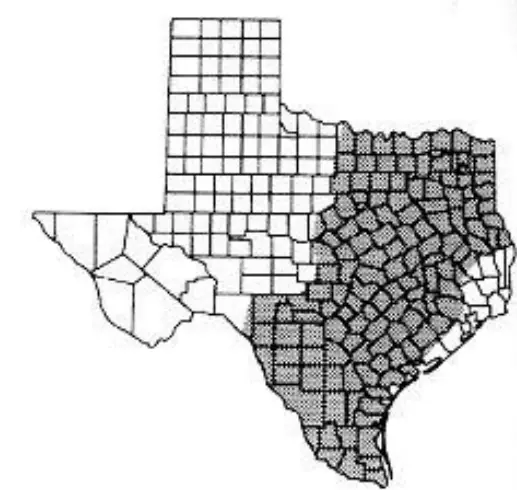
Description: Cedar Elm is the most widespread native elm in Texas. It grows in all areas of the eastern half of Texas except the extreme southeastern part. It is a tough, adaptable shade tree with excellent drought tolerance and beautiful golden yellow fall color. Its leaves are small and rough, and glossy green in the spring. It is the only native Texas elm that flowers and sets seed in the fall.
Habitat: Cedar Elm can withstand heavy, poorly drained clay soils and soils that are moderately compacted.
Scientific Name: Ilex vomitoria
Mature Height: Up to 25-30 feet
Maximum trunk diameter: 12-15”
Bark: The bark is smooth, light grey with lighter grey to nearly white splotches.
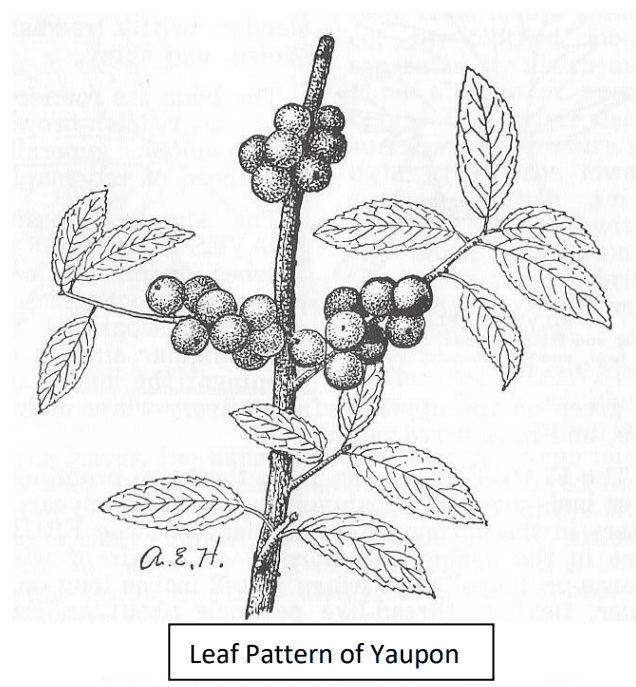
Leaves: Alternate and oval in shape. They are dark green with a leathery appearance and a lighter colored underside. The leaf margins have a slight serration.
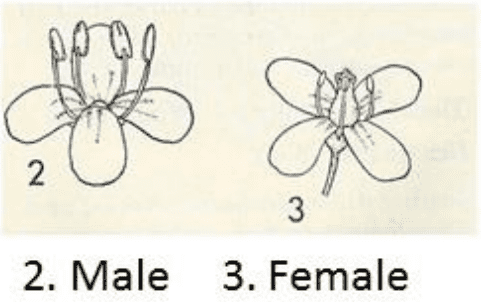
Flowers: Yaupon is dioecious with male and female flowers on different plants.
Value (annual): $56
Description: Yaupon is a native perennial evergreen shrub capable of reaching approximately 30 feet in height under ideal conditions. The slight serration of the leaves and alternate arrangement easily distinguish this species from the similar looking invasive non-native Chinese privet, Ligustrum sinense Lour (smooth edge and opposite leaves). Chinese privet has come to occupy a similar niche in the environment after it was introduced through the horticulture and landscape industry in the late 1800s.
Yaupon holly produces small white flowers in the spring followed by red berries on female plants that remain through fall. Birds dine on the berries, but they can induce vomiting in humans.
Uses: The Indians used the shoots for arrows. When dried the leaves and bark can be used to make a caffeinated tea. Yaupon makes an excellent hedge plant. It is an evergreen, and when trimmed correctly, produces a thick screen of vegetative material. Individual specimens can be readily trimmed into ornamental designs and shapes. Yaupon is adapted to a wide array of soils and climate conditions. It is disease free, moderately fast growing, and tolerates drought extremely well once established.
Scientific name: Quercus nigra
Mature height: 60 – 80 feet
Mature crown width: 50 – 70 feet
Trunk: 1 – 3 feet
Value (annual): $256
Description: Water Oak has a spreading, rounded, open canopy, and is most often used for a naturalized landscape. The acorns are particularly abundant on Water Oak and make good food for wildlife. They badly stain asphalt and concrete for several months in fall and winter.
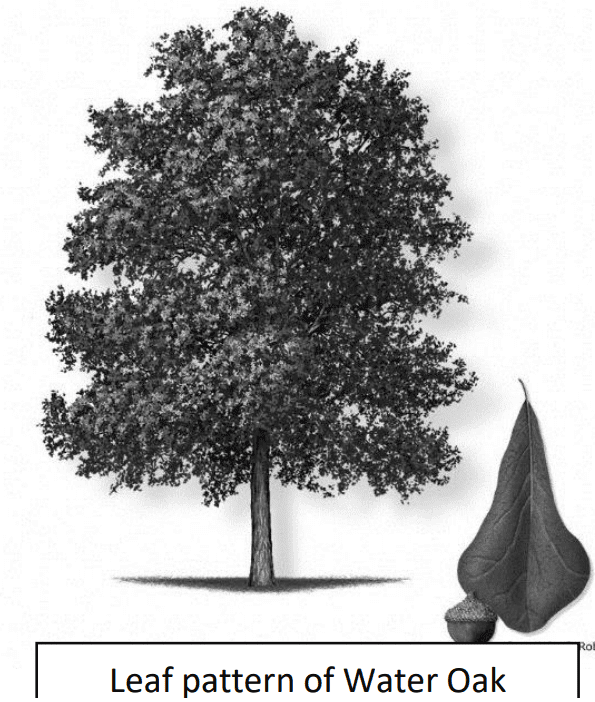
The leaves vary tremendously, from rounded and entire to three-lobed with several bristle tips but are most frequently spatulate. Water Oak is deciduous in the North, semi-evergreen in the Deep South, and trees reach 60 to 80 feet in height (shorter when grown in the open) with a 50 to 70-foot spread. Some trees put on a wonderful yellow fall color show for about a week.
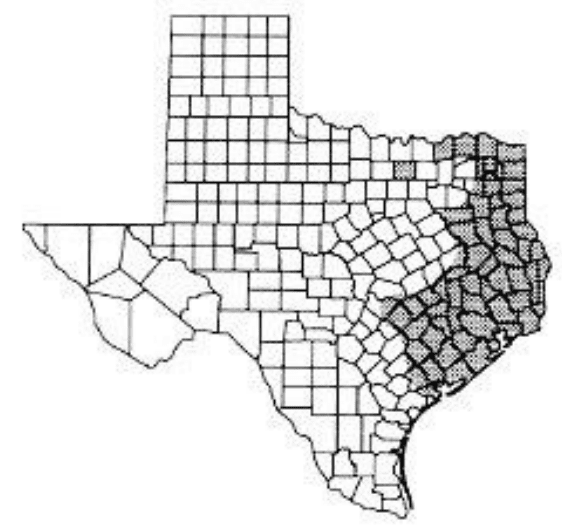
Use and Management: A rapid grower, Water Oak has a relatively short life span of only 30 to 50 years, particularly in the east on good sites where growth is rapid. Perhaps more durable and not as weak-wooded in drier areas such as Texas and Oklahoma where growth is slower. The tree often begins to break apart just as it grows to a desirable size. For this reason, Live, Bur, Shumard, Red, White, Swamp White Oak and others are much better choices.
Like other Oaks, care must be taken to develop a strong branch structure early in the life of the tree. This might increase the life span by eliminating the need for removing large-diameter branches. Pruning large branches from the trunk often initiates decay in the trunk.
A North American native, Water Oak is adapted to wet, swampy areas, such as along ponds and stream banks, but can also tolerate other well-drained sites and even heavy, compacted soils. Not adapted to highly alkaline soil but will grow well in clay. Propagation is by seed or hardwood cuttings.
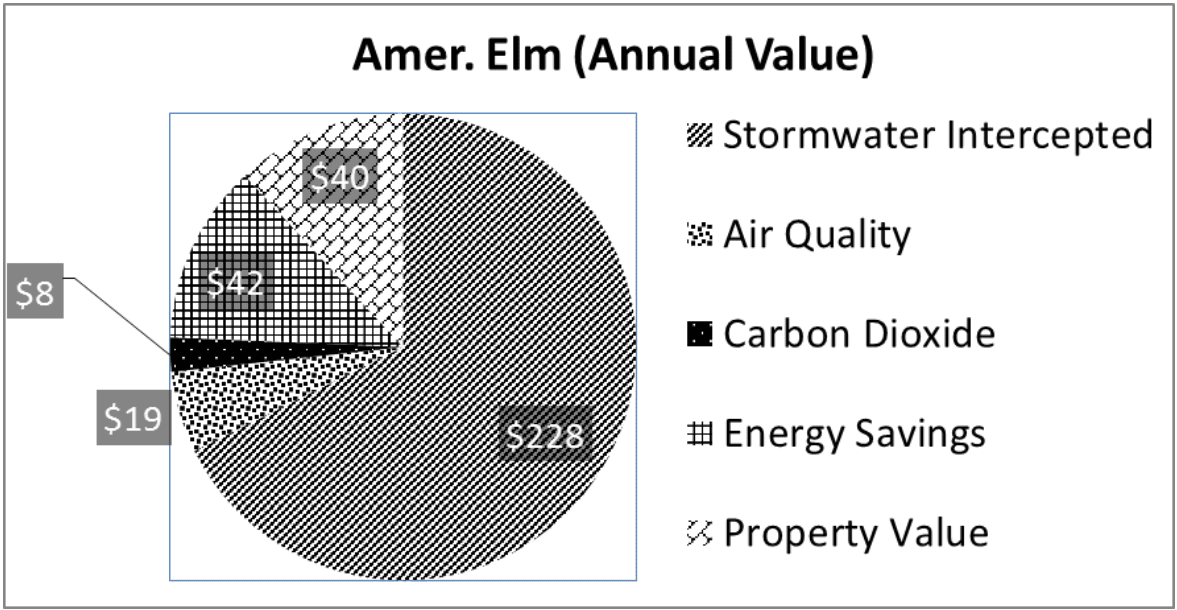
Scientific name: Ulmus americana
Mature height: > 100 feet
Trunk: > 4 feet
Value (annual): $337
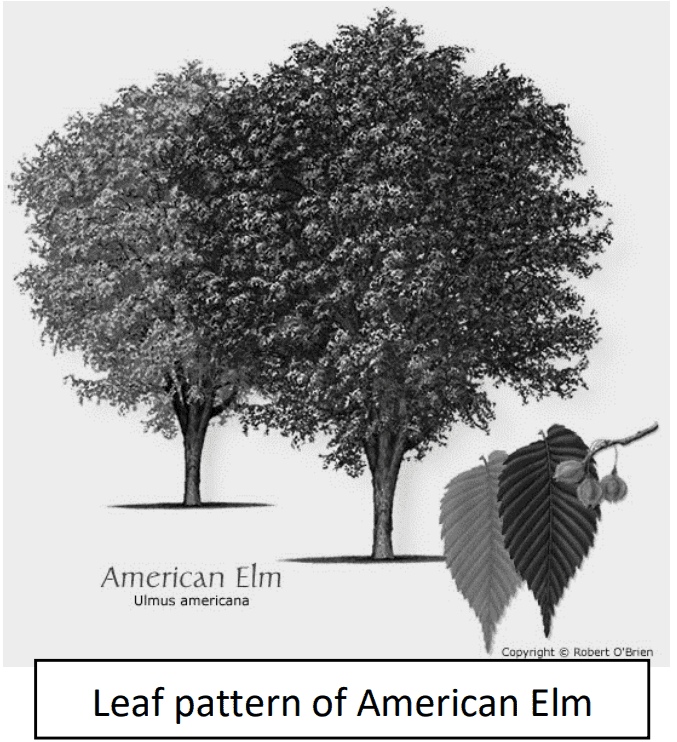
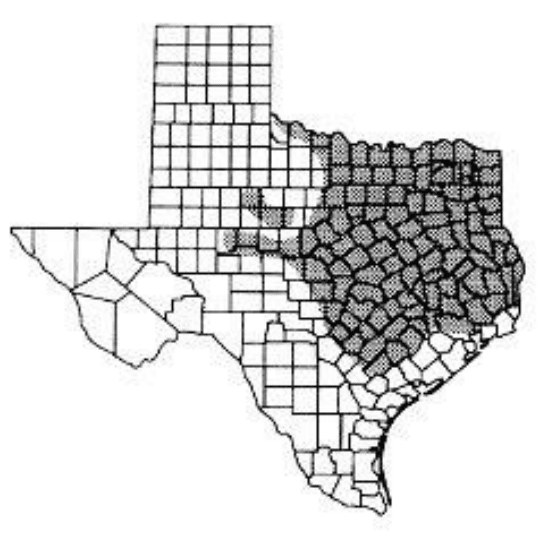
Description: Generally known as the American elm or, less commonly, as the white elm or water elm, is a species native to eastern North America, occurring from Nova Scotia west to Alberta and Montana, and south to Florida and central Texas. The American elm is an extremely hardy tree that can withstand winter temperatures as low as −44°F. Trees in areas unaffected by Dutch elm disease can live for several hundred years.
The American elm is a deciduous hermaphroditic tree which, before the introduction of Dutch elm disease, commonly grew to > 100 ft tall with a trunk > 4 ft supporting a high, spreading umbrella-like canopy. The leaves are alternate, 3–8 in. long, with double-serrate margins and an oblique base. The perfect flowers are small, purple-brown and, being wind-pollinated, apetalous. The flowers are also protogynous, the female parts maturing before the male, thus reducing, but not eliminating, self-fertilization, and emerge in early spring before the leaves.
American Elm is wholly insensitive to daylight length (photoperiod), and will continue to grow well into autumn until injured by frost.
Habitat: American elm is very adaptable. It occurs in neutral to acid soils and sandy loams as well as heavy clay soils that are alkaline. In the eastern part of the country it grows in deep forests that receive up to 60 inches of rain per year, yet in its western range can occur in dry soils that receive less than 25 inches.
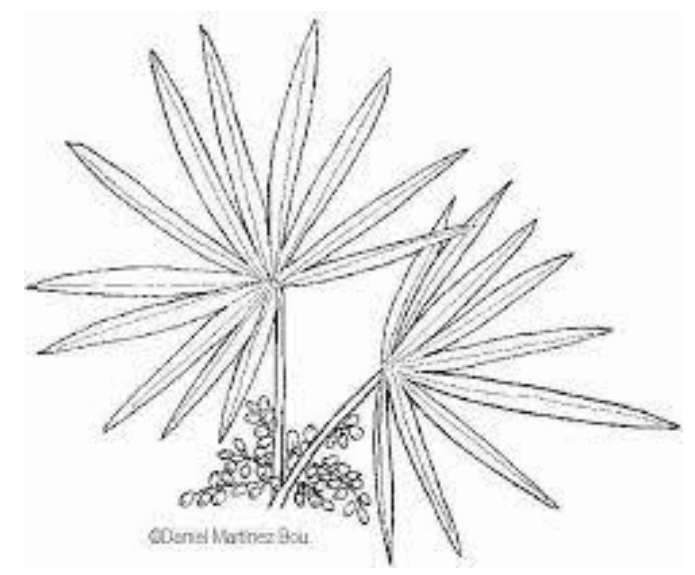
Scientific name: Sabal minor
Max. Height: 7-10 feet
Value: not available
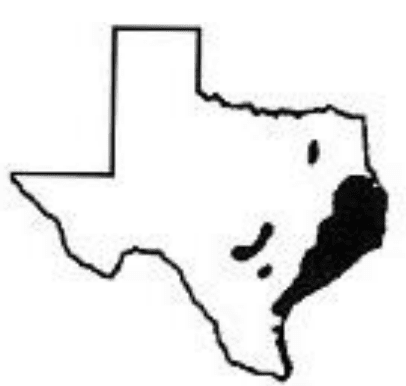
Description: Sabal minor, commonly known as the Dwarf Palmetto or Bush palmetto, is one of about 14 species of palmetto palm. It is native to the southeastern United States. In former times, it was said to be native as far north as southeastern Virginia, but its current known range begins about 10 miles south of the Virginia border on Monkey Island in Currituck County, North Carolina, and continues south to Florida.
It is widespread along the gulf coast through Louisiana into eastern Texas north to Oklahoma. Although it is mainly found in the southern states, it is one of the only palms that can stand somewhat cooler temperatures. It is one of the most frost-tolerant palms, surviving temperatures as low as −18°C among North American palms. Its cold-hardiness is variable throughout its range with the Oklahoma native population believed by many to be the cold-hardiest population. This palm may be hardy to zone 6B.
The Dwarf Palmetto grows up to 1 m (rarely 3 m) in height, with a trunk up to 30 cm diameter. It is a fan palm, with the leaves having a bare petiole (stem) terminating in a rounded fan of numerous leaflets. Each leaf is 1.5–2 m long, with 40 leaflets up to 80 cm long, conjoined over half of this length.
The flowers are yellowish-white, 5 mm across, produced in large compound panicles up to 2 m long, extending out beyond the leaves. The fruit is a black drupe 1–1.3 cm long containing a single seed. It has been confused with the Saw Palm (Serenors repens) although the Saw Palm has a sawlike petiole stem.
Habitat: It grows in clumps or dense thickets in sandy coastal lands or as undergrowth in pine woods or hardwood bottomlands. Stands of Dwarf Palmettos when present with other water tolerant trees and clay rich soils are a good indication of possible wetlands and/or consistent flooding. Erect stems or trunks when present are also often a sign of regular flooding. It is extremely slow growing, and long lived, with some plants, especially in Florida where it is known as simply the palmetto, possibly being as old as 500–700 years.

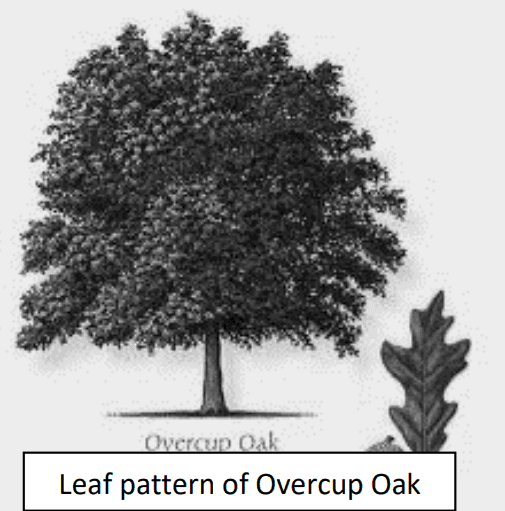
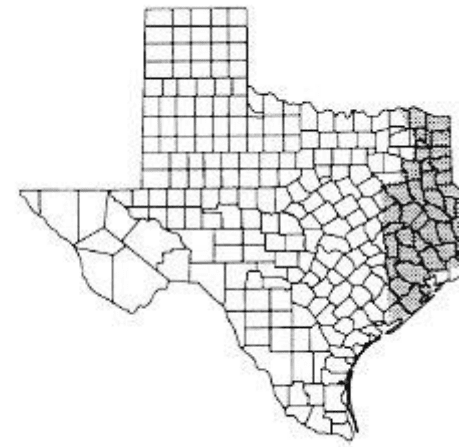
Scientific name: Quercus lyrata Walt.
Average Height: 65 feet
Average Diameter: 2.5 feet
Average Leave Length: 4-6 in.
Value (annually): $199
Description: The form and quality of the tree vary greatly throughout its range, but often it will be short and crooked. The wood is heavy, hard, strong and durable and is used for the same purposes as white oak. It is a very sturdy shade tree that will thrive in a wide variety of soil conditions.
The common name comes from the acorns being largely enclosed in the cup; the scientific name comes from the lyrate (lyre-shaped) leaves. It can attain a height of 90 feet.
Habitat: It is native to lowland wetlands in the southeastern United States. It can grow well in acid sands, sandy loams and clays in oxygen deficient wet soils. It is almost always confined to swamps.
Scientific name: Arundinaria gigantea
Height: 1.5 to 25 feet
Value: not available
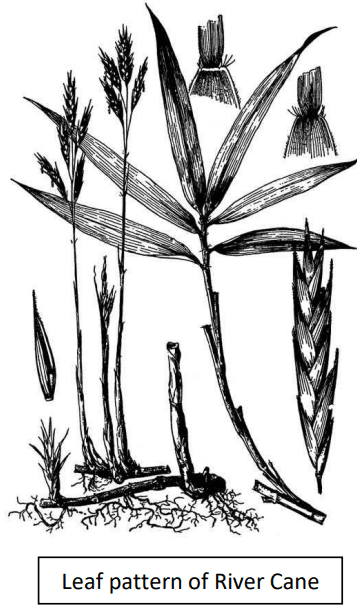
Description: Arundinaria, commonly known as the canes, is the sole genus of bamboo native to eastern North America and the only temperate bamboo in North America. The genus is endemic to the eastern United States from New Jersey south to Florida and west to Ohio and Texas.
Within this region they are found from the Coastal Plain to medium elevations in the Appalachian Mountains. Its members have running rhizomes and are woody and tree-like, attaining heights from 1.5 to 25 feet. They produce seeds only rarely and usually reproduce vegetatively, forming large genets. When seed production does occur, the colony usually dies afterwards.
Among the distinctive features of the canes is a fan-like cluster of leaves at the top of new stems called a top knot. Dense stands of River Cane are difficult to traverse as the Catbriar often weaves through the plants causing a painful resistance.
Uses: Giant cane provides high-quality forage for cattle, horses, hogs, and sheep. It is valued for summer grazing in northern part of range and for winter grazing in states along the gulf coast. Stems of this grass are also used for fishing poles, pipe stems, baskets, and mats.
Habitat: It grows easily in flooded and saturated soils. In the Lake Creek floodplain it becomes thickest as you approach a stream bed. This is readily apparent on the sections of trail nearest the stream.
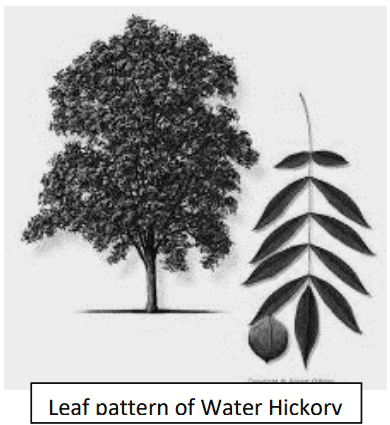
Scientific name: Carya aquatica
Leaf length: 8-16 in long
Flower: 2-3 in long, yellow-green catkins
Nut: 1-2 in long (Oval, flat)
Large tree height: 100 feet tall
Diameter: several feet
Value (annual): $146
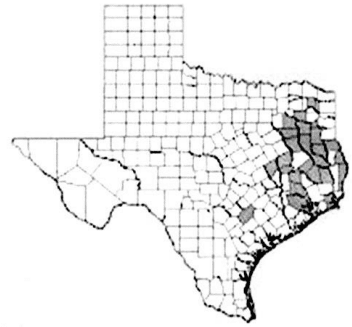
Description: This is a slow-growing tree that generally does not begin producing fruits until after age 20. Individuals of this species can tolerate both a wetter site and a wider range of soil moisture levels than any other hickory, surviving on poorly drained, tight textured soils that are flooded in winter and parched in summer.
The position of the species is distinct, however, with water hickory occupying the lowest, wettest sites.
Uses: The nuts of water hickory are used to a limited extent by squirrels, feral hogs, and other wildlife. Water hickory is occasionally planted or retained in natural stands for a shade tree. The wood is locally preferred firewood and sometimes used to make fence posts.
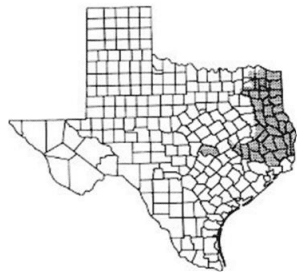
Habitat: Occurs in swamps and wet bottomland forests—on ground that is often under water during part of the year. Low floodplains, in which water hickory is a dominant species, are being increasingly recognized for their ability to cleanse drainage water and provide refuge for many threatened species of plants and animals.
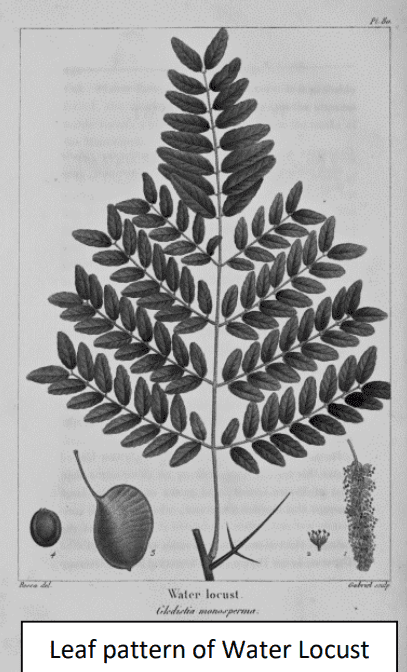
Scientific name: Gleditsia aquatica
Height: 50 to 60 feet
Width: to 30 feet
Value: not available
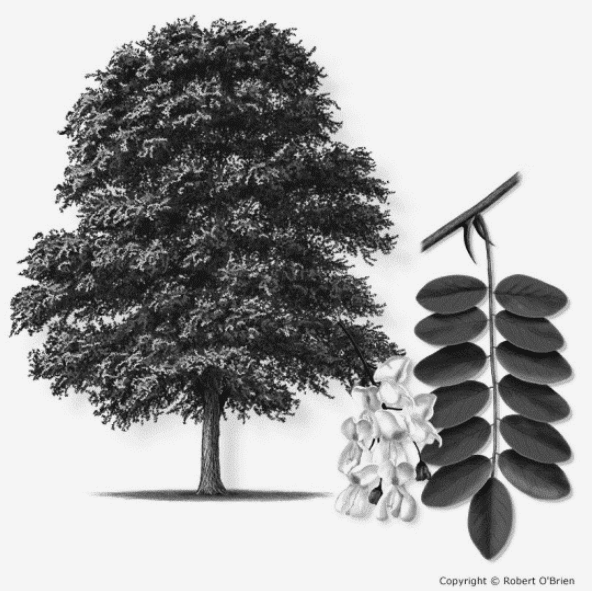
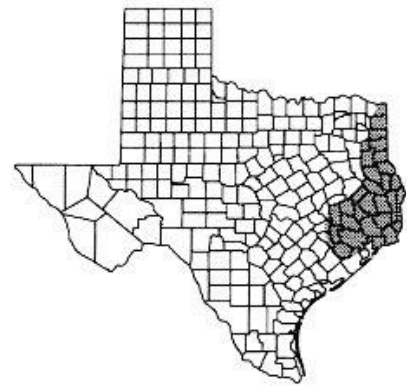
Description: The water locust is commonly found throughout the southern US next to rivers and streams. It is one of the few trees that can withstand standing water. It flowers in May or June and the fruit, a small legume with one seed (sometimes up to three seeds) per pod, ripens in August. Seeds are consumed by turkey.
Wood is very hard, strong with wide rings. Water Locust is a very thorny tree with thorns growing up to 1 foot in length. Thorns grow directly from the trunk and from branches. Trunk grows to 2 to 3 feet in diameter. Water locust trees grow very fast at about 2 to 3 feet per year.
Value: It provides food and shelter to many animals, attracts wildlife and most importantly it sequesters large amounts of carbon dioxide.
Habitat: Occurs in bottoms and swamps along the Gulf Coast. It can grow in standing water.
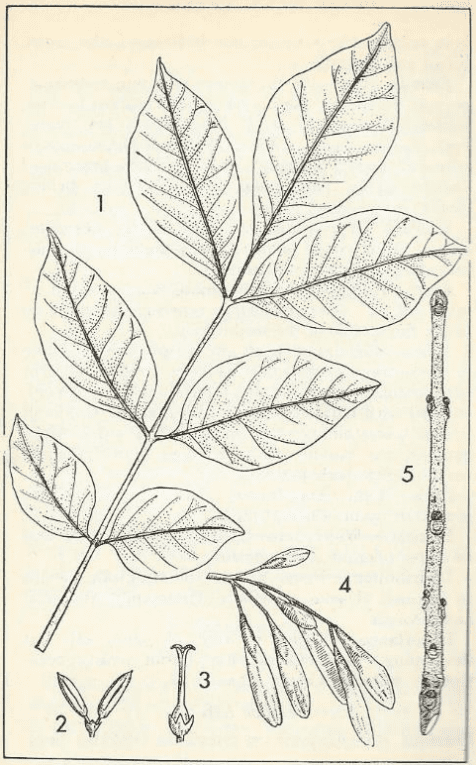
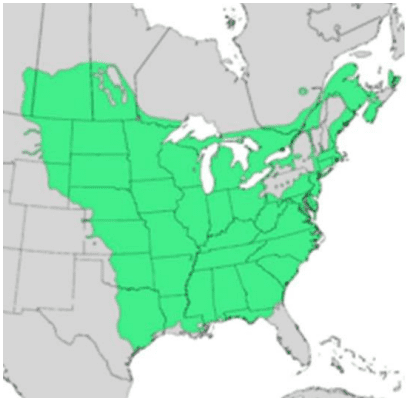
Scientific Name: Fraxinus pennsylvanica
Mature Height: 60 feet
Maximum trunk diameter: 18”-24”
Bark: Gray; furrowed into scaly ridges with reddish inner layer.
Leaves: Opposite; pinnately compound; 6-8” long with 5-9 leaflets 2-5” long.
Flowers: 1/8” greenish in small clusters. Male and female flowers are on separate trees.
Ecological Value (annual): $148
Description: One of most widespread ash species in North America. Trees have dense rounded or irregular crown of shiny green foliage. Along streams and in forested wetlands. One of the indicator trees associated with frequently flooded areas. Associated with Water Hickory, American Elm and Sugarberry in wetter parts of the preserve.
Uses: The wood is heavier and more brittle than White ash, but generally used for the same applications (firewood, cabinet wood, tool handles, baseball bats and long oars). Indians used the straight branchlets for arrows.
Scientific Name: Salix nigra
Mature Height: 40 feet
Maximum Trunk Dia: 24 inches
Bark: Brown to black, deeply fissured, flat ridges dividing into thick scales becoming somewhat shaggy with age.
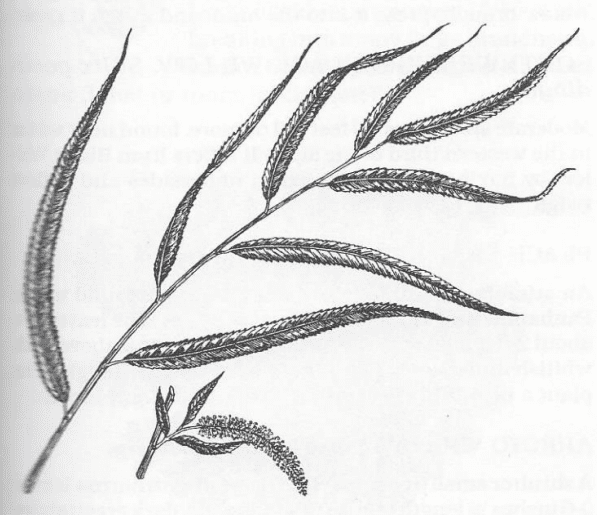
Leaves: Blades 3-6 inches long and ¼ to 3/4 inch wide with finely toothed margin.
Flowers: Yellow catkins about 1 inch long born in early spring. Male and female flowers on separate plants (dioecious).
Ecological Value: Black willow is the largest and most widespread Texas willow. It is found along drainage ditches, swamps and in wet soils throughout the state. It is fast growing averaging 4 feet in growth in a year.
Uses: Its extensive root system makes it useful in erosion control. The tree roots easily from cuttings making it especially easy to plant in large erosion control projects. The wood is soft and weak, but flexible and useful in basket weaving and wicker furniture.
The bark contains salicylic acid (a component of aspirin). The Europeans and American Indians used a tea made from the bark to control fever, painful joints and rheumatic pain. Birds feed on the buds and flowering catkins and deer eat the twigs and leaves.
Scientific name: Crataegus viridis
Mature Height: 35-40 feet
Fruit/Seed: Small sized fruit; red to yellow
Leaf: Simple, alternate leaves, 1 to 3 inches long; dark green, toothed and shallowly lobed.
Value (annual):
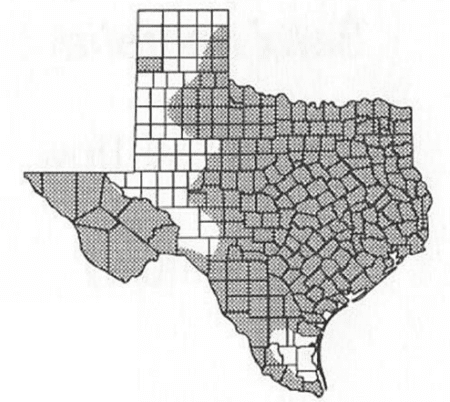
Description: Green hawthorn grows on widely different soils and rainfall areas over the eastern two thirds of Texas. Its height ranges from shrub-size in the western part of its range to 35 feet in the eastern. Its bark is smooth and light grayish tan and the tree is usually thornless, although it may have small slender thorns.
Uses: The young leaves, flower buds and berries are all edible, and the plants are increasingly valuable herbal medicines. In diverse places such as Devon, the Isle of Man, and the Highlands of Scotland, hawthorn has traditionally been used in folk medicine as a primary heart tonic, as well as being used for centuries to correctly balance high and low blood pressure.
The leaves, berries, and flowers of hawthorn are still used to make medicine in some regions. Hawthorn is used for diseases of the heart and blood vessels such as congestive heart failure (CHF), chest pain, and irregular heartbeat.
Habitat: Hawthorns will also be found in woodlands (especially at the edges), and on waysides and roadsides.
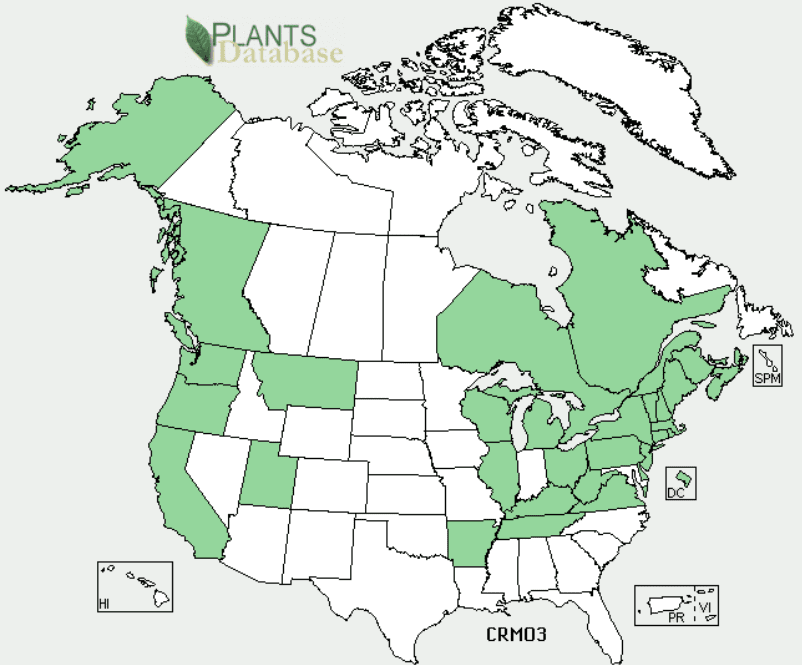
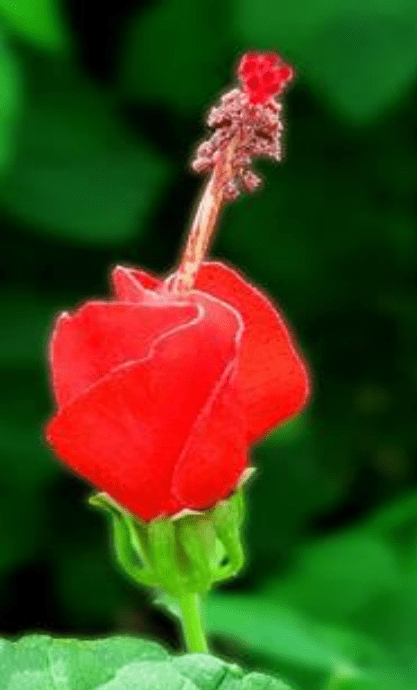
Scientific Name: Malvaviscus arboreus
Mature Height: 5 – 16 feet, spread 2-5 feet
Leaves: A coarse shrub, upper stems greenish and velvety to the touch, woody near the base. Leaves, including petioles, up to 5 inches or more long; broadly heart shaped to weakly 3 lobed, with broad teeth, upper surface dark green, lower surface lighter and velvety, palmately veined.
Flowers: Showy, petals bright red, overlapping, 1 to 3 inches long (4-7 cm), pistil and stamens forming a column protruding beyond the petals. It often blooms from May through November but will bloom during a mild winter.
Fruit: Red, a 5 lobed capsule cupped in green remnants of the flower. Berries are edible either raw or cooked, tasting rather like apple.
Description: Malvaviscus arboreus is a species of flowering plant in the hibiscus family, Malvaceae, that is native to the Southeastern United States, Mexico, Central America, and South America. The specific name, arboreus, refers to the tree-like appearance of a mature plant. It is now popular in cultivation and goes by many English names including Turk’s cap, Turk's turban, Bleeding Hearts, Mexican Apple and Scotchman's purse.
Uses: Malvaviscus arboreus is a common understory shrub where it occurs in Texas and Louisiana and is an important food source for Ruby-throated Hummingbirds. M. arboreus is often cultivated as a landscape and garden ornamental and as a potted plant for its colorful flowers. It is also grown as a medicinal herb.
Leaves and flowers are used in traditional medicine in Central America and Haiti. Flower and leaf decoctions are used for the treatment of cystitis, diarrhea, gastritis, sore throat, bronchitis and fever.
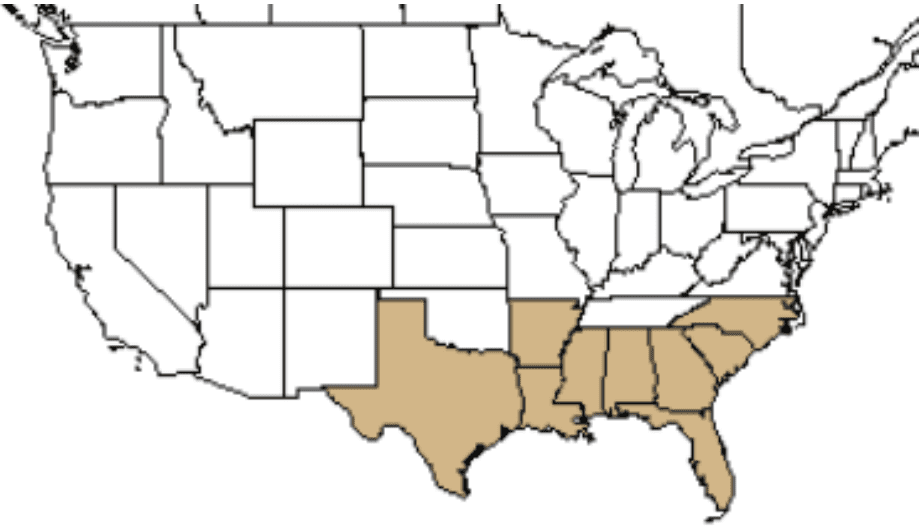
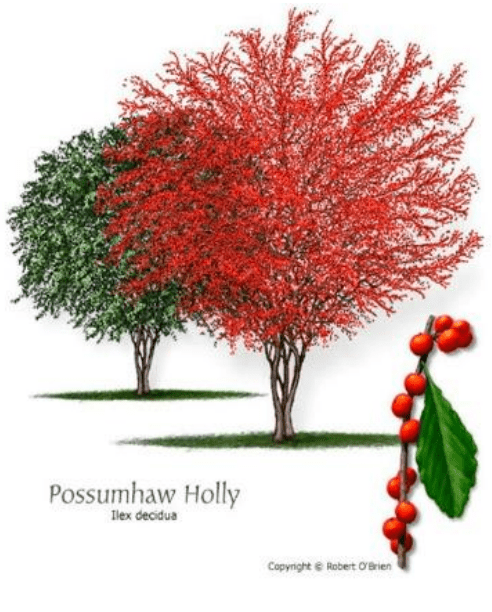
Scientific name: Ilex decidua
Mature height: 15-30 ft
Max height: 30 ft
Max trunk diameter: 8-10 inches
Leaves: 2-4 inches long and ½ to 1 inch wide
Flowers: 5 petals, Dioecious
Ecosystem Services Value: $10/year
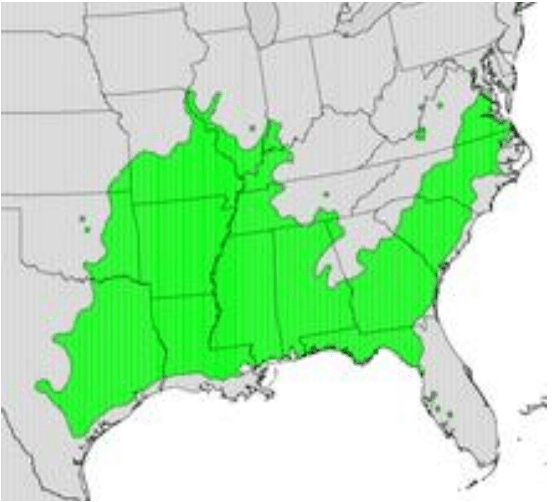
Description: Inhabits lowlands, swamps, stream sides or moist rich upland soils in mixed hardwood forests. The possumhaw seeds germinate the best if they are planted immediately after they’ve been collected. It is classified as a small deciduous tree or a shrub.
It has twiggy pale gray horizontal branches and will grow white flowers from March to May. Following the growth of the flowers small fruits begin to appear and turn orange/red when they ripen in Autumn. The leaves usually remain dark green through Autumn.
Uses: This tree is the kind of plant used in parking lots or around highways as “buffer strips”. They can be placed around the bottom part of a patio or deck as well; this plant can be known as a barrier plant. It can also be used as a bonsai tree.
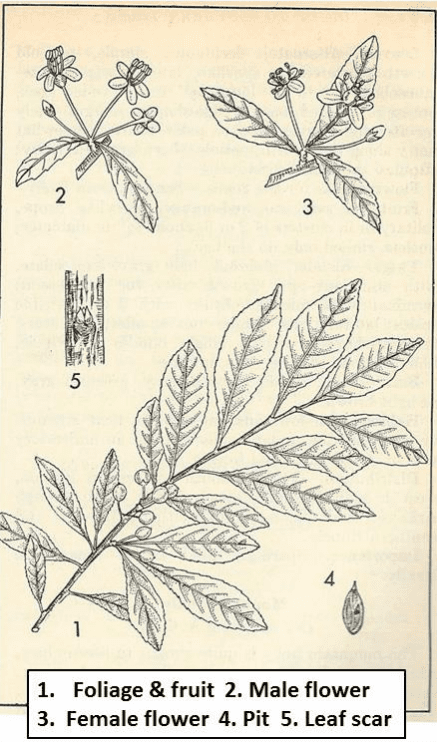
Scientific name: Melia azedarach
Mature Height: 30 feet
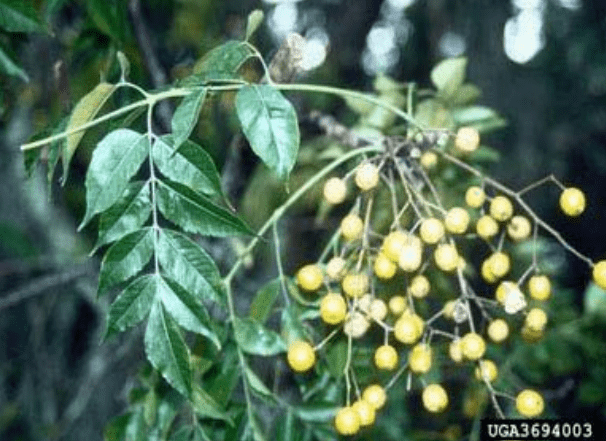
Fruit/Seed: Round, yellowish tan berries in clusters
Leaf: Lanced shaped leaf with tapered tip; dark green and light green
Value (annual):
Description: Chinaberry is a fast-growing deciduous tree that reaches 30 to 50 feet tall and has a canopy that is usually 20 feet in diameter. The tree is often made of several smaller trunks because it is able to readily sprout from the roots.
Stems can vary in coloration from olive-green and brown to a purplish red. Leaf scars from dropped leaves are three lobed and noticeable. The bark is a different color from the stems and is usually a dark brown or reddish brown covered in light-brown spots.
Uses: All parts of the plant, especially the fruit are poisonous to humans, some livestock, and mammals, including cats and dogs. Symptoms post-consumption include vomiting, diarrhea, breathing difficulty or paralysis. Cattle and some birds can eat the berries without harm. Also used for insecticides.
Habitat: Most invasive in riparian zones or disturbed sites. Also, is often present around rural home sites.
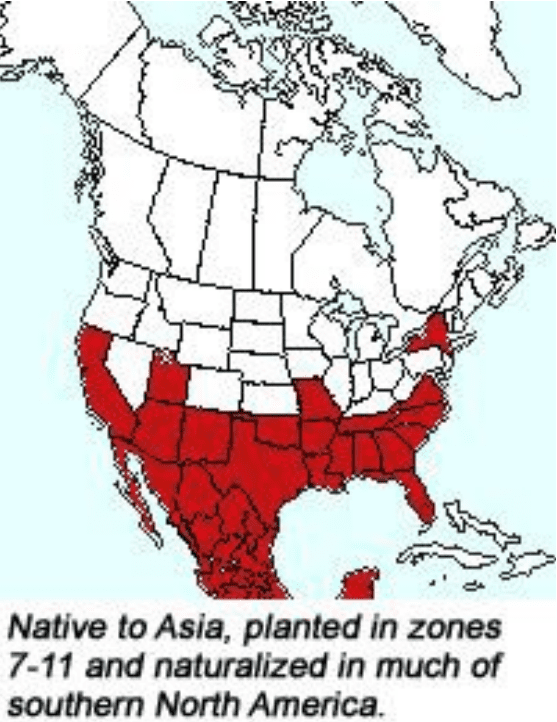
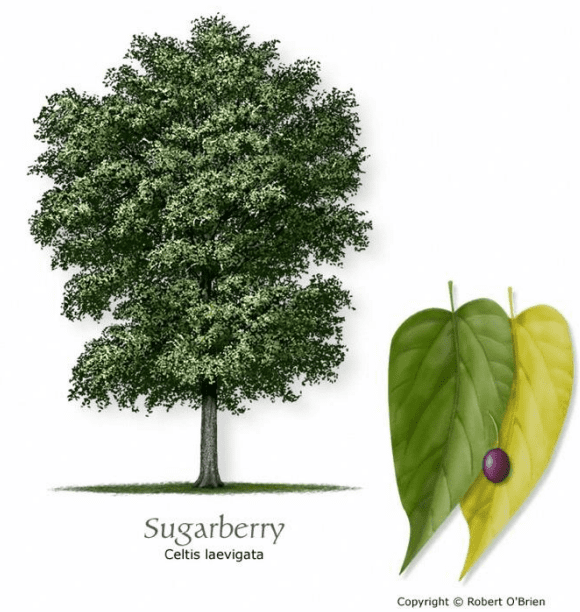
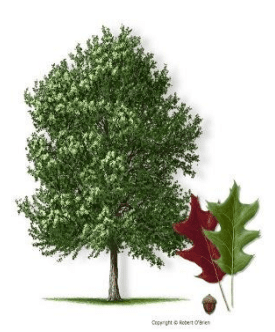
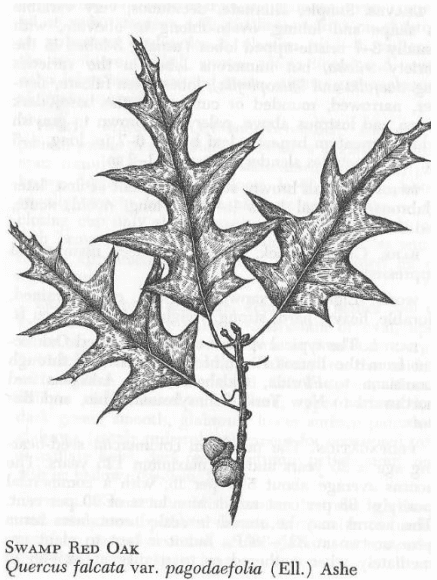
Scientific name: Quercus falcata var. pagodaefolia; Quercus pagoda
Mature height: 80-100 ft
Max height: 130 ft
Max trunk diameter: 3-5 ft
Leaves: 5-8 in
Ecosystem Services Value: $259/yr
Description: Depending on author and/or locality the tree has been called a separate species, a subspecies or a variant of Q. falcata. While scientific name is based on the pagoda shaped leaf and several other characteristics, DNA testing may be required to determine the truth.
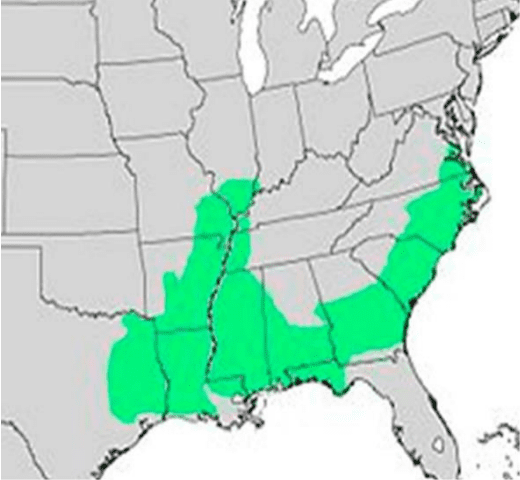
This is a common bottomland species/variant of the southern coastal plains and Mississippi valley. This variety has pagoda shaped leaves with 5-11 shallow lobes and smooth cherry-like bark with short ridges. The twigs are stout, reddish brown to grey.
When it is young the bark is usually smooth but it quickly develops small scaly ridges as it matures and gets older. As with most oaks the acorns provide food for ducks, turkeys, squirrels and other rodents, deer and feral hogs. It has strong wood to help support its super tall height. It commonly grows on moist sites. Flowers usually grow February to May depending on the latitude.
Uses: Cherrybark oak is one of the most valued and high quality oaks in the southern United States. Due to this, it is a very popular choice for furniture, veneer, cabinets, etc. The wood’s strength also makes it very useful for general construction and fence posts. Native Americans also used Cherrybark to help with indigestion and asthma.
Scientific name: Platanus occidentalis
Mature Height: 80-130 feet
Fruit/Seed: A spherical ball about 1" in diameter, attached to a flexible stalk 3" to 5" long.
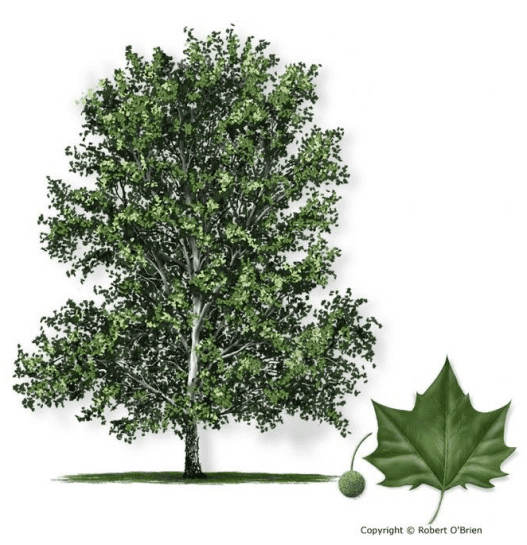
Leaf: Simple, alternate, 4" to 12" wide and about as long, palmately-veined with the 3 to 5 main veins ending at the tip of a wide lobe.
Mature Value (annual): $340
Description: An American sycamore tree can often be easily distinguished from other trees by its mottled bark which flakes off in great irregular masses, leaving the surface mottled, and greenish-white, gray and brown.
Considered the largest deciduous tree in North America, sycamore in Texas can exceed 100 feet in height and 4 feet in diameter, with a stout trunk and large, spreading limbs that create an oval or round, spreading crown.
Uses: The sycamore is a relative of maples and so can be tapped in late winter for sap. Sycamore syrup is much lower quality than maple syrup and takes approximately 50 gallons of sap to produce 1 quart of syrup.
Its wood has been used extensively for butcher’s blocks. It has been used for boxes and crates; although coarse-grained and difficult to work, it has also been used to make furniture, siding, and musical instruments.
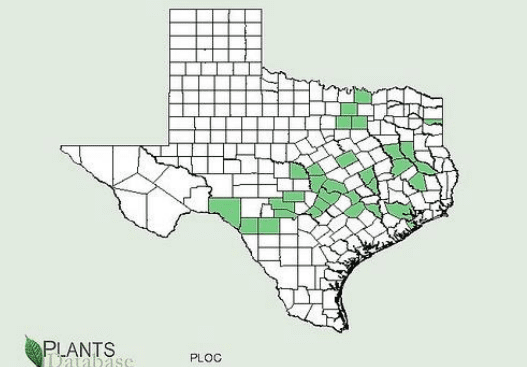
Habitat: In its native range, it is often found in riparian and wetland areas. The range extends from Iowa to Ontario and Maine in the north, Nebraska in the west, and south to Texas and Florida.
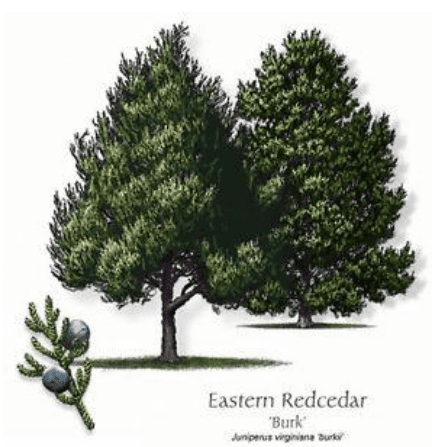
Scientific name: Juniperus virginiana
Mature Height: 30-40 feet
Fruit/Seed: Small, blue, berry like fruit
Leaf: Fragrant, scale-like foliage can be coarse or fine-cut, and varies in color from gray-green to blue-green to light- or dark-green.
Value (annual):
Description: The eastern red cedar tree is a common sight throughout most of the plains states and eastern United States on road cuts, in fence rows and scattered across abandoned fields—especially where limestone soils are present. It is an aromatic tree, with reddish wood giving off the scent of cedar chests and crushed fruit providing a scent of the alcohol (Gin) they once flavored.
Uses: The red cedar is used by many tribes for incense in purification and rituals. As a cure for asthma, the Gros Ventres ate whole red cedar berries or pulverized them and boiled them to make a tea. The wood of red cedar is very durable, and was used for lance shafts, bows, and other items.
Flutes made from red cedar wood were highly regarded by the Cheyenne. Cedar boughs were used for bedding.
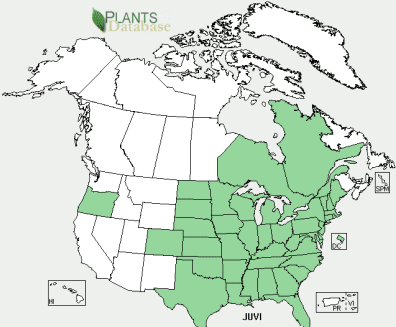
Habitat: It is especially well adapted to dry areas. Red cedar is generally propagated by cuttings. The distribution of red cedar (Juniperus virginiana) spans the U.S. east of the Rockies. The species also occurs in Oregon in the west.
Scientific name: Acer negundo
Mature Height: 50-60 feet
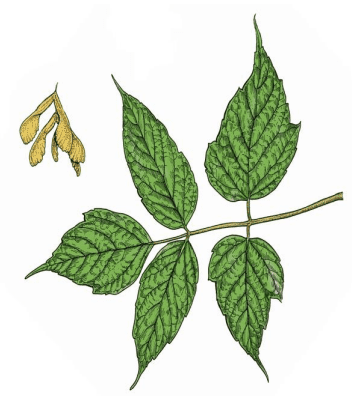
Fruit/Seed: The single seed is borne in a samara, or key—i.e., a broad, flat wing like structure.
Leaf: The compound leaves (rare among maples) consist of three, five, or seven coarsely toothed leaflets.
Mature Value (annual): $140
Description: Box Elder is one of the most widespread and best known of the maples. Its other common names include ash leaf maple, box elder maple, Manitoba maple, California box elder, and western box elder.
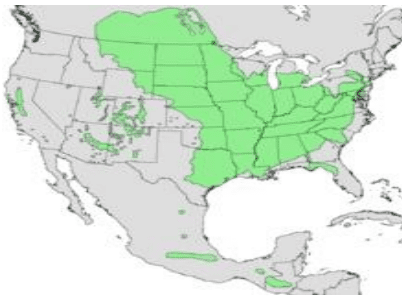
Best development of the species is in the bottom-land hardwood stands in the lower Ohio and Mississippi River valleys, although it is of limited commercial importance there.
Uses: Owing to its quick growth and its drought resistance, the box elder was widely planted for shade by early settlers in the prairie areas of the United States. Maple syrup and sugar are sometimes obtained from the box elder. Its wood is used for crates, furniture, paper pulp, and charcoal.
Habitat: Habitats include floodplain forests, open disturbed woodlands, woodland edges, thickets, river banks, fence rows, shallow ditches, roadsides, areas near bridges, and urban waste areas.
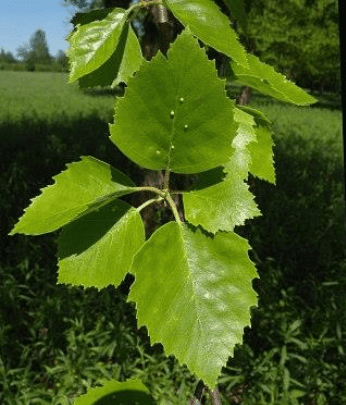
Scientific name: Betula nigra
Mature Height: 40-70 feet
Fruit/Seed: The fruit is unusual among birches in maturing in late spring; it is composed of numerous tiny winged seeds packed between the catkin bracts.
Leaf: The leaves are alternate, ovate, and broad, with a serrated margin and five to twelve pairs of veins.
Mature Value (annual): $150
Description: As its name suggests, the river birch naturally grows along river banks. But as a landscape tree, it can be planted almost anywhere in the U.S. The species is valued for its relatively rapid growth, tolerance of wetness and some drought, unique curling bark, spreading limbs and relative resistance to birch borer.
The river birch has not yet reached the popularity of many maples and oaks, but it is well on its way.
Uses: River birch, as an ornamental tree, offers fall and winter color to parks, yards and street sides. Its durable wood is easy to work with and is used to make a variety of items, including toys, artificial limbs and flatware. River birch also is valuable as a source of erosion control and is used to reclaim areas with high soil acid caused by mining.
Wildlife, such as birds and rodents, eat its seeds, and deer eat its twigs and foliage.
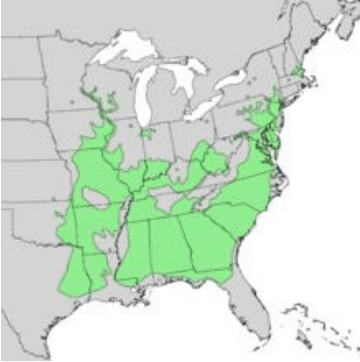
Habitat: River birch (Betula nigra), also known as red birch, black birch or water birch, is native to the southeastern United States where the trees typically grow in thickets along rivers and lakeshores, as well as on floodplains, sandbars and islands in streams.
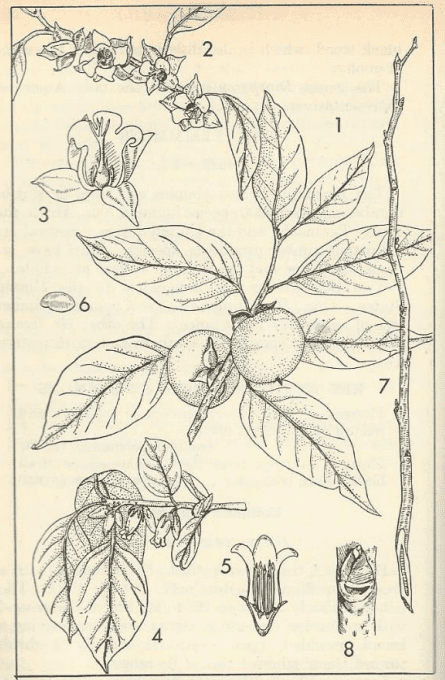
Scientific Name: Diospyros virginiana
Mature Height: 20-70’ feet
Maximum trunk diameter: 12-24”
Bark: Brown or blackish, deeply furrowed into small square scaly plates on mature trees. Resembles alligator skin.
Leaves: Simple, alternate smooth margin, deciduous, oblong, 4-6” long and 2-3” wide. Leathery with a dark green color above and paler below.
Flowers: In the spring to early summer. Dioecious (male and female flowers on separate plants).
Ecological Value (annual): $94
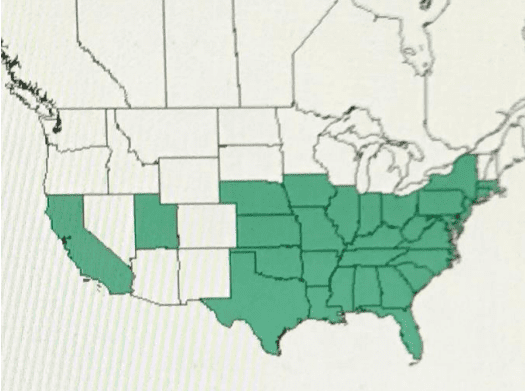
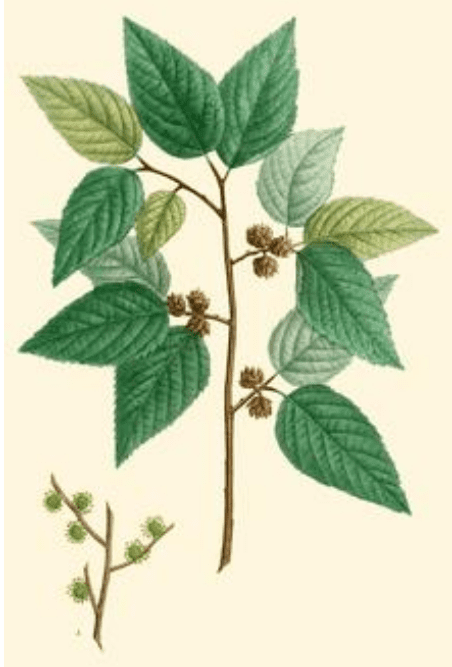
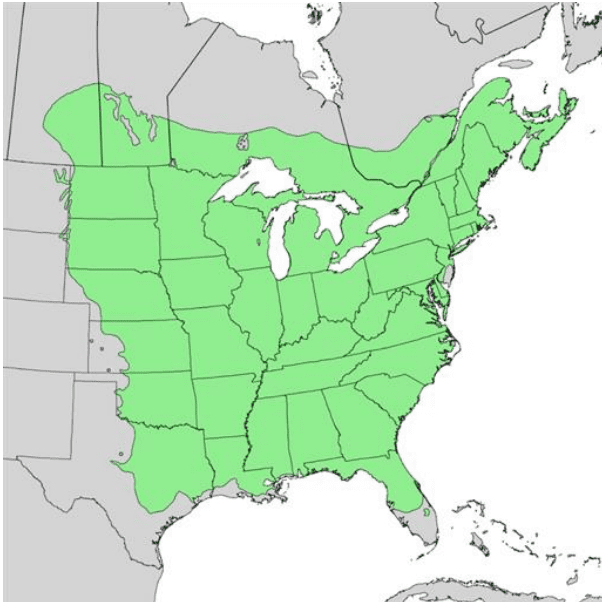
Description: In the open it forms a dense cylindrical crown. Sometimes occurs as a shrub. Adapted to a range of habitats from bottomlands to dry uplands and along fence rows. Can form dense thickets through root sprouts. In the preserve tends to occur in isolation or in small groups.
Uses: Known to the Indians and early settlers for its sweet fruit when ripe. Green or un-ripened fruit is more astringent than full strength alum. Some wait until after the first frost before harvesting.
Persimmon wood is noted for its toughness, strength, hardness and ability to absorb shock. Its primary uses were for textile weaving shuttles, billiard cues, spools, bobbins and golf club heads.
Many species of wildlife feed on the fruit. The habit of suckering from the roots on poorer soils make it useful for erosion control.
Scientific name: Planera aquatica
Mature Height: 30-35 feet
Fruit/Seed: Soft, prickly nut 10–15 mm diameter, instead of a winged seed.
Leaf: The leaves are 3–7 cm long, with a serrated margin.
Value (annual):
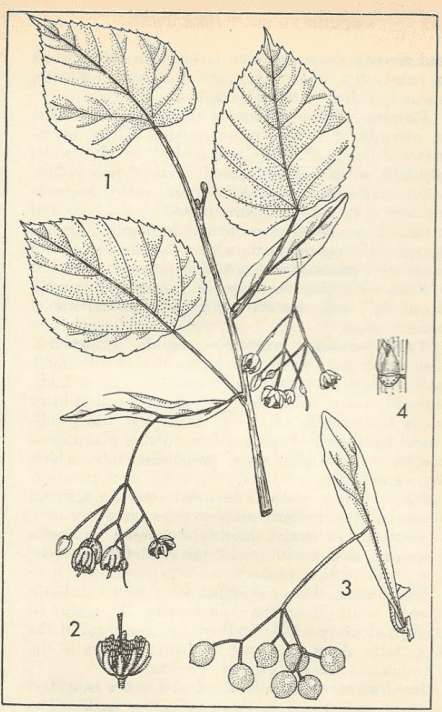
Description: Planer tree or Water elm is a small, deciduous tree, often with sprouts near the base. Its spreading branches form a low, broad crown to 40 ft. in height. Reddish-brown, scaly, flaky bark covers the short trunk. Dull-green leaves are asymmetrically elm-like.
This distinctive and uncommon small tree is the only species of its genus; however, fossil relatives have been found in Eurasia.
Uses: Serves as a home for many animals including birds, squirrels, insects, and more. The wood is sometimes used for pulp although not much as the tree is susceptible to Dutch Elm disease. Otherwise does not have commercial uses.
Habitat: The Water elm occurs naturally in an assortment of habitats, most notably rich bottomlands, floodplains, stream banks, and swampy ground, although it also often thrives on hillsides, uplands and other well-drained soils.
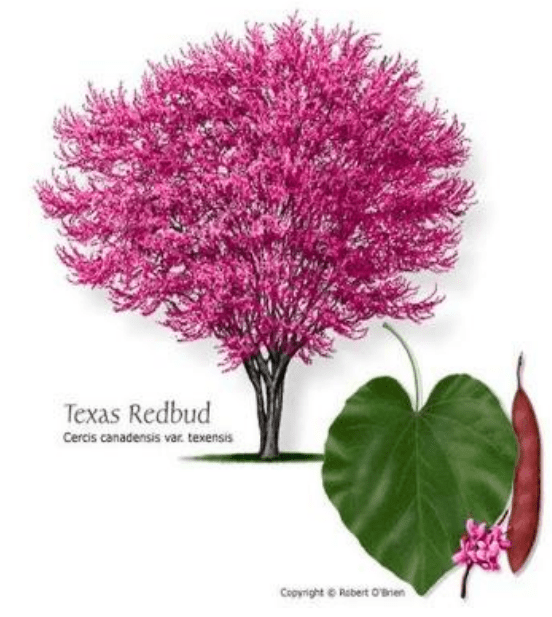
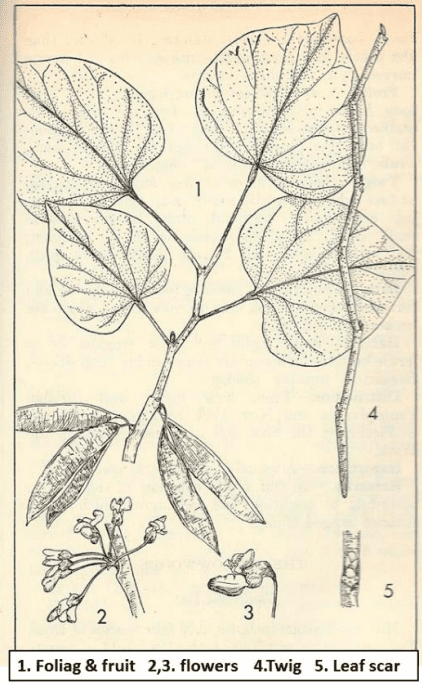
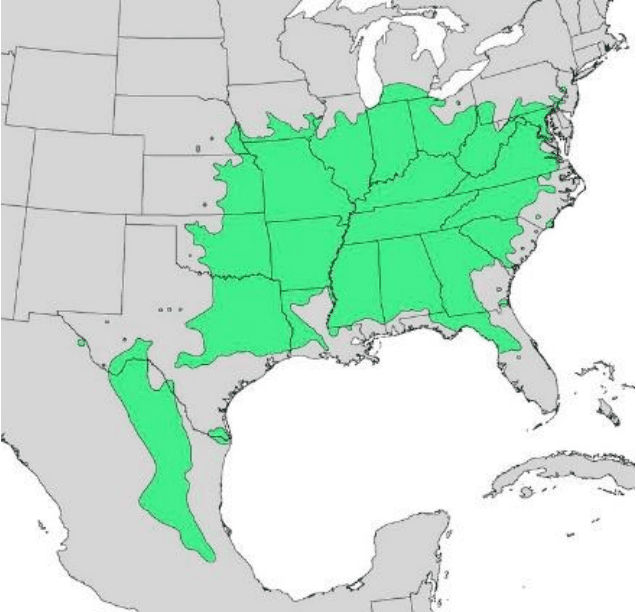
Specific name: Cercis canadensis
Mature height: 20-30ft
Max height: 40 ft
Mature trunk diameter: 8-12 in
Max trunk diameter: 15 in
Leaves: 2-6 in
Description:
The Redbud is a small tree with spreading branches. Its bark is very smooth which could be brown to grey or black. When it is older it gets scaly ridges to it and also gets shallow furrows. It grows in acidic, alkaline, loamy, moist,rich, sandy, with well drained clay soils. It blooms rosy pink heart shaped flowers in April, It also begins flowering very early at around 4 years. It has a medium rate of growth and averages about 13-24 inches per year. It is considered a flowering, and a ornamental tree.
Uses:
In addition to its use as a landscaping plant, the redbud tree has been used to treat illness. The tree’s bark was first boiled by native Americans and turned into a tea for treating whooping cough, diarrhea. The tree’s roots and inner bark have also been used for relieving fevers, congestion, and vomiting. Another interesting use of the redbud is that it’s flowers can be eaten raw or pickled. They have a refreshing acid taste and are rich in vitamin C. They make a nice addition to salads. The very young green pods have also been eaten cooked with a dash of vinegar and olive oil.
The tree is known to contain saponins which are poorly absorbed by humans and are broken down in the cooking process. However, they are much more toxic to some creatures such as fish and have been used by hunting tribes to stupefy or kill fish for harvesting.
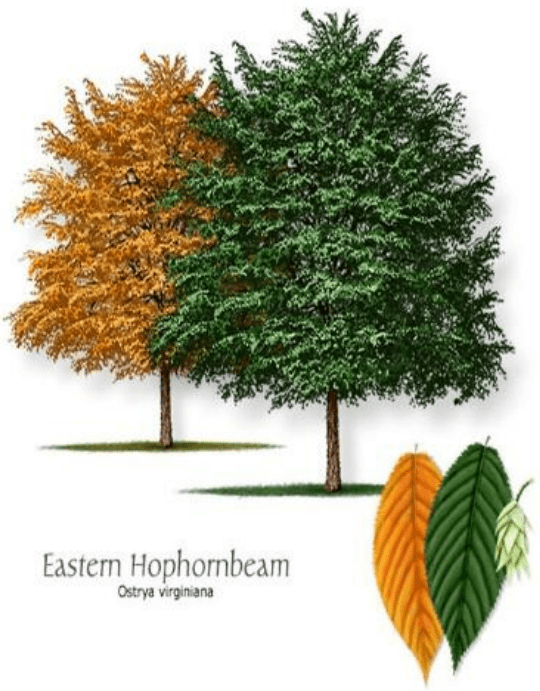
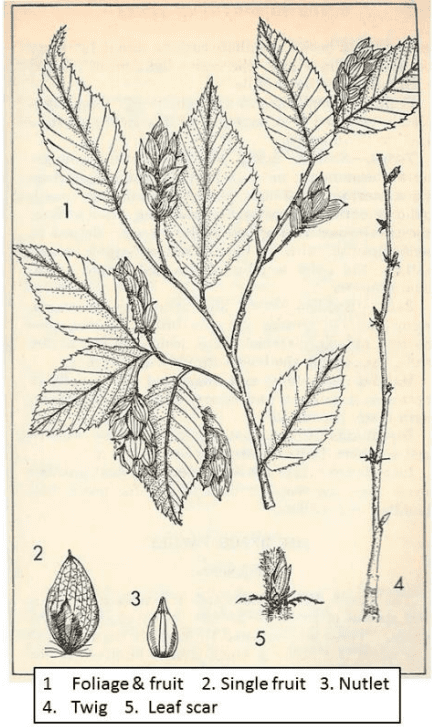
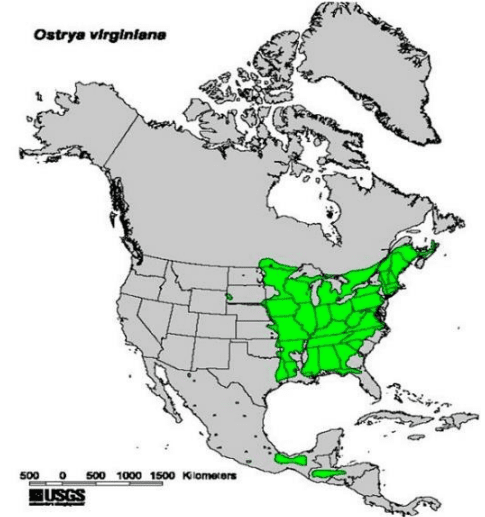
Scientific name: Ostrya virginiana
Mature height: 20-40 feet
Max height: 65 feet
Mature trunk diameter: 1-2 feet
Max trunk diameter: 3 feet
Leaves: 2-6 inches long
Ecosystem Services Value: $21/yr
Description: The Eastern Hophornbeam is generally found as an understory tree in moist forests of dry hillsides. The bark has a light brown color to it, with a shredded look. The shredded look is due to loose scales it has or small plates (another name as you may be desired to call it) and can be broken easily because they’re loose at their ends. The leaf is simple, flat, oval shaped, and double serrate, the basic leaf color for it is green and in the fall they turn yellow. The seed pod resembles the flower of the Hops plant.
Uses: The wood of this tree is strong and it has been used for fence posts, making tool handles, and mallets. The buds and nutlets found in the tree are eaten by birds such as the Grouse, Pheasants, and Quail.
Scientific Name: Vitis rotundifolia
Common Name: Muscadine, Bullace, Scuppernong, Southern Fox Grape.
Ecological Group: Dicot in the family Vitaceae
Mature Height: 30 ft
Maximum Height: 100 ft
Ecological Value: N/A
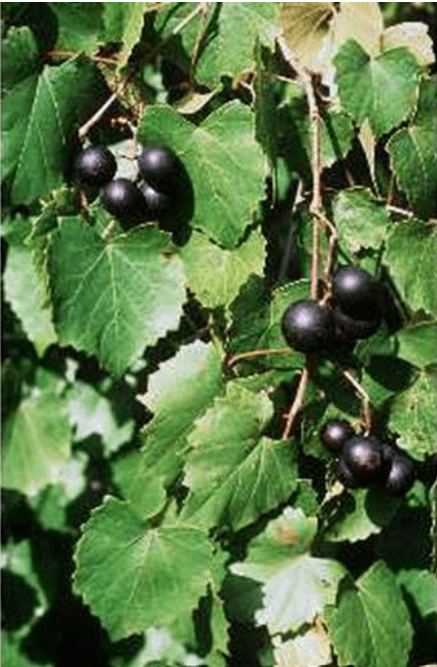
Bark: The bark is smooth and dark greenish brown in young vines. As the vine ages, the bark turns dark brown in color and develops vertical grooves.
Leaves: Leaves are simple, deciduous, and about 4” wide and 4” long. The rounded leaves have coarsely serrate edges. Leaves are smooth, dark green above and green tinged yellow, somewhat hairy below.
Flowers: The Muscadine Grape has small greenish-white flowers that mature in auxiliary panicles in the summer.
Fruit: The fruit is a berry/grape that is borne singly or in small clusters, usually no more than 12 berries in a cluster. Berries are round and up to 1” or more in diameter. The black purple or bronze berries have tan spots when ripe, a thick, tough skin, and contain up to 5 hard, oblong seeds. Berries ripen from July through September. The Muscadine is dioecious, meaning that a male and female or perfect flowering cultivar is needed to produce fruit.
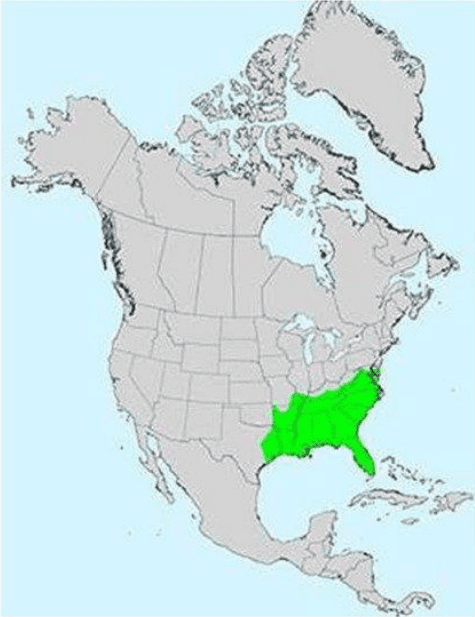
Habitat: Woods, thickets, sand hills and shores. The natural range of Muscadine extends from Delaware to central Florida and occurs in all states along the Gulf Coast to east Texas.
Description: Muscadine is a vigorous, high-climbing or prostrate, deciduous vine, sometimes reaching lengths in excess of 90 ft. In nature, it is typically found in dry upland forests with especially sandy or rocky soil, swamps, roadsides, and thickets.
Uses: Native Americans used this fruit for food, medicine, and in some ceremonies. Its fruits are eaten by songbirds, ruffed grouse, wild turkeys, small mammals, squirrels, white-tailed deer, raccoons, foxes, and black bears. Thickets provide nesting cover for songbirds. Bees and other pollinators enjoy the nectar from the flowers. Fruit can be eaten fresh or is used to make wine and an assortment of jams, jellies, and other preserves.
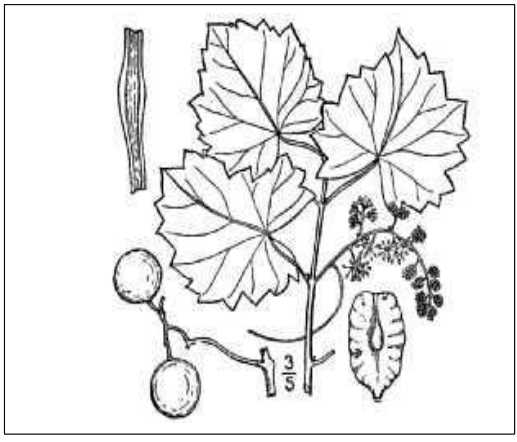
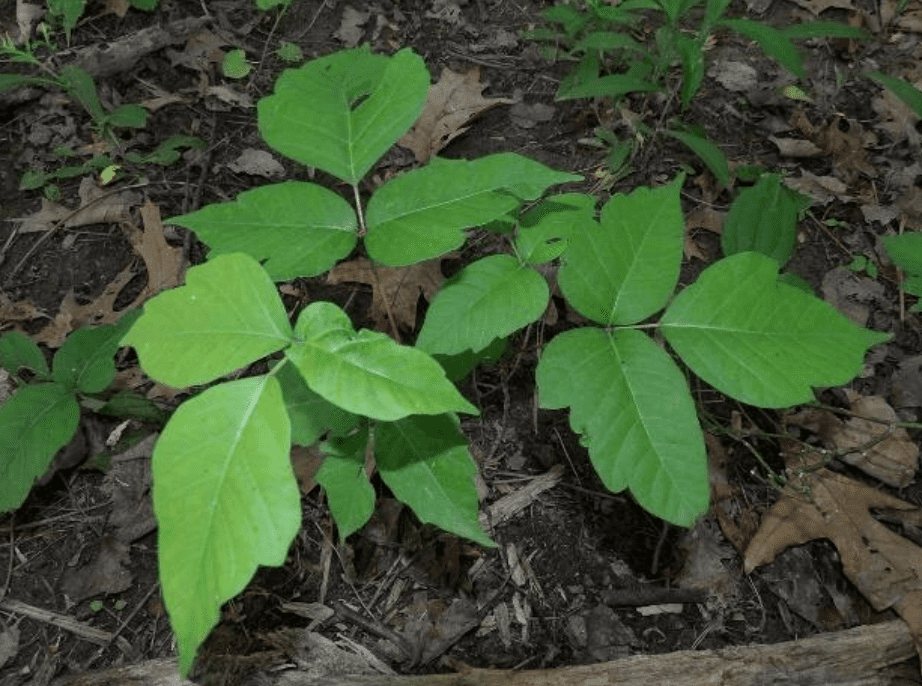
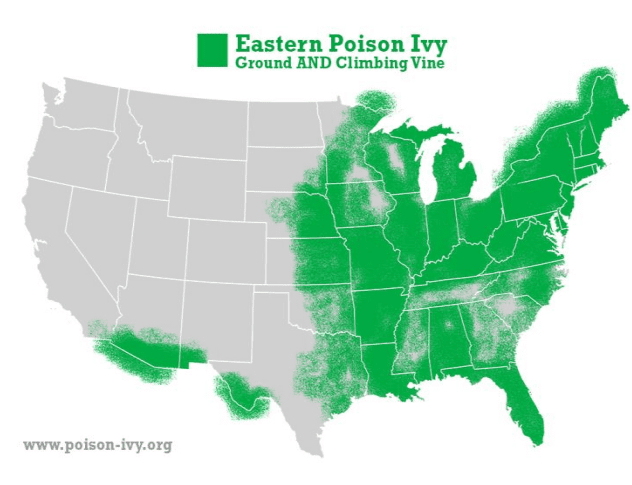
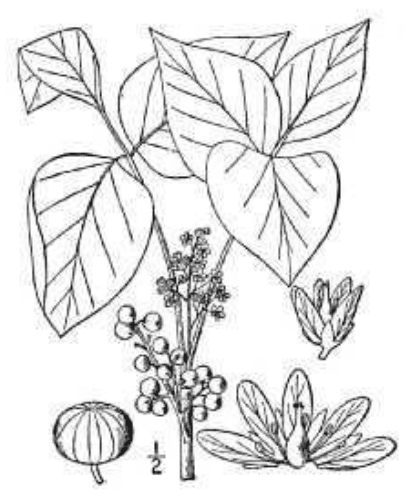
Scientific Name: Toxicodendron radicans
Common Name: Poison Ivy.
Ecological Group: Dicot in the family Anacardiaceae
Mature Height: N/A
Ecological Value: N/A
Maximum Height: > 100 ft as climbing vine, 4 ft as a shrub, 10 inches as trailing vine
Bark: The bark of Poison Ivy is gray. Vines climbing a tree will have fine hairy roots growing from bark attaching the vine to the tree trunk.
Leaves: Leaves are deciduous; alternate; compound with 3 leaflets; leaflets are ovate and irregularly toothed; shiny green above, paler below.
Flowers: Flowers small and yellowish-green, borne in clusters.
Fruit: The fruit is greenish-white berries; round, about ¼ inch in diameter; borne in hanging clusters; ripe in late summer; persists through winter; fruit is favorite food for birds who spread the seed widely.
Habitat: Prairies; woodlands; glades; waste ground; fence rows; bluffs; thickets; roadsides; railroads; nearly anywhere. Prefers rich soil with good drainage and plenty of water but can grow almost anywhere. Likes full sun but can tolerate partial shade.
Description: Poison Ivy is upright, climbing, or trailing shrub that bears small yellowish-white flower clusters; old stems, covered with fibrous roots, look hairy. Poison Ivy is extremely variable in form, occurring as a ground cover along roadsides, an erect shrub (especially in sandy coastal areas), or a large vine on trees. Red fall foliage is especially conspicuous. The plant is well-known for causing an itchy, irritation, and sometimes painful rash in most people who touch it.
Uses: The small fruits of poison ivy are known to provide food for at least 75 species of birds, especially wild turkey, bob-white quail, ruffled and sharp-tailed grouse, and ring-necked pheasants and mockingbird.
Other Names: Palmetto Oak Flats, Wet Forests, Palmetto Hardwood Flats
Habitat: The Big Thicket is the name given to a somewhat imprecise region of a heavily forested area in Southeast Texas in the United States. It is a highly biodiverse area for a temperate region, that has been described as "America's Ark" and the "Biological Crossroads of North America". While no exact boundaries exist, interpretations have included everything between the Sabine River on the east and the San Jacinto River on the west including much of Montgomery, Newton, Trinity, and Walker counties as well.
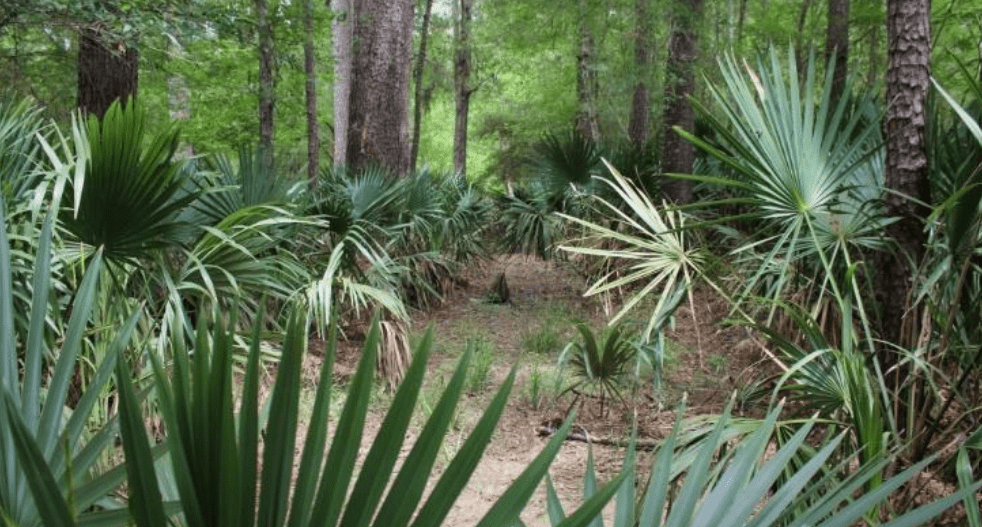
Flora: If you look into the distance, you can make out stands of dwarf palmettos (Sabal minor), an indicator of this ecosystem and giving the area an exotic and tropical look with epiphytes draping from the trees, like Spanish moss (Tillandsia usneoides) and resurrection fern (Pleopeltis polypodioides).
The canopy is made up of several hardwoods species of which the swamp red oak or cherrybark oak (Quercus pagoda), laurel oak (Quercus laurifolia), overcup oak (Quercus lyrata), willow oak (Quercus phellos), and cedar elm (Ulmus crassifolia) are dominant species. Other trees and shrubs filling in the canopy and understory include sweetgum (Liquidambar styraciflua), black tupelo (Nyssa sylvatica), parsley hawthorn (Crataegus marshallii).
Description: Flats are old river channels and floodplains and their associated bars and levees, filled with centuries of sediments and alluvium deposits. Flats are typically poorly drained areas with very deep calcareous soils of a high clay content having vertosols properties, meaning the soil moves, shrinking and swelling with moisture content. Palmetto-oak flats alternate between flooded and dry conditions, with a few inches of water standing for days, weeks, even months after rains, to dry periods in which the soils dry, leaving large and deep cracks in the hard-baked surface.